


The people who use our boards.
425 interviews since 2018

Manuel
del Jesus
Hydraulic Engineering Professor
Who are you, and what do you do? What do you like to do outside of work?
I am professor at a Spanish public university (Universidad de Cantabria), where I teach Hydrology to future civil engineers. I also do research on hydroclimatology and hydraulic engineering, and I complement my activity with technological transfer (or consultancy, depending on how you would like to look at it).
Most of my time is devoted to doing research, advising PhD candidates, and trying to get funds to do more research. Teaching is an important part of my activity, but after some years it does not demand lots of time outside of the exam periods, so I would say that research is my main time-consumer, although my position is justified with the teaching that I do.
I am a very curious person, and I devote a lot of time to “work.” At the end of the end, an important part of my work is studying and learning new things. Since I am very curious, I feel very privileged to be paid for learning new things and trying to solve new problems. I would not call myself a workaholic, but I must recognize that I devote a lot of time to work-related stuff.
However, I do also have many hobbies. I have always liked music a lot, so I devote some time to playing my Spanish guitar. I am not really good at it, but it relaxes me a lot to play music by myself.
I also love reading books, nonfiction and novels alike. I am always reading at least one book, if not multiple books at a time. Back in the day, before buying an ebook reader, I was carrying a book with me most of the time. Now, in my device I have all the books that I am reading and all those that I may want to read in the near future, so being an avid reader has never been easier.
I also love the sea, and walking along the local beaches of Santander and its surroundings. Indeed, I have always had a special relation to the sea. I do not even remember when I learned to snorkel and fish, since I have been doing it forever. Lately, I have started doing scuba diving, and it has been one of the most wonderful activities I have ever undertaken.
What hardware do you use?
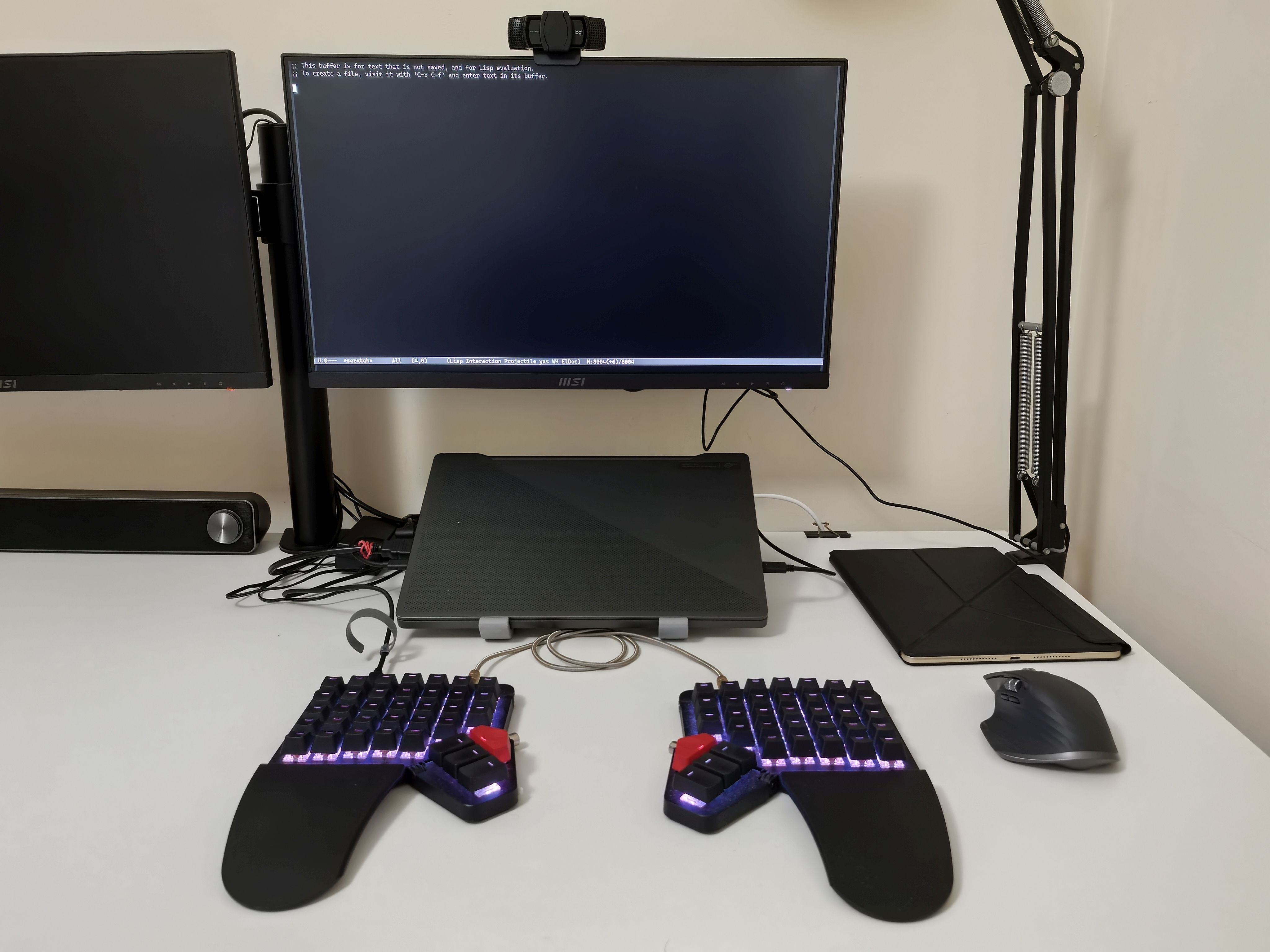
I use two Linux workstations and a Linux laptop. The workstations are configured with Linux Mint and the laptop with Fedora. I have always liked Debian and derivatives, and Linux Mint is a sweet spot between usability and stability. I tried to use Ubuntu, but did not like snaps much. I have a similar problem with AppImages and Flatpacks. I understand why they exist, and sometimes they are very useful, but in general terms I am so used to the usual way of installing programs that I try to avoid these newer packaging options when I can.
The reason why I use Fedora on my laptop is because it is a Republic of Gamers one, which required a custom kernel when I bought it to function properly. Since the very nice people at Asus-Linux suggested to use Fedora, I followed their recommendation and have since been very happy. I recognize that the quick release cycle of Fedora creates some problems with software that I need and use for work, but being able to use my laptop to its fullest is a must, so I try to navigate the issues when they appear.
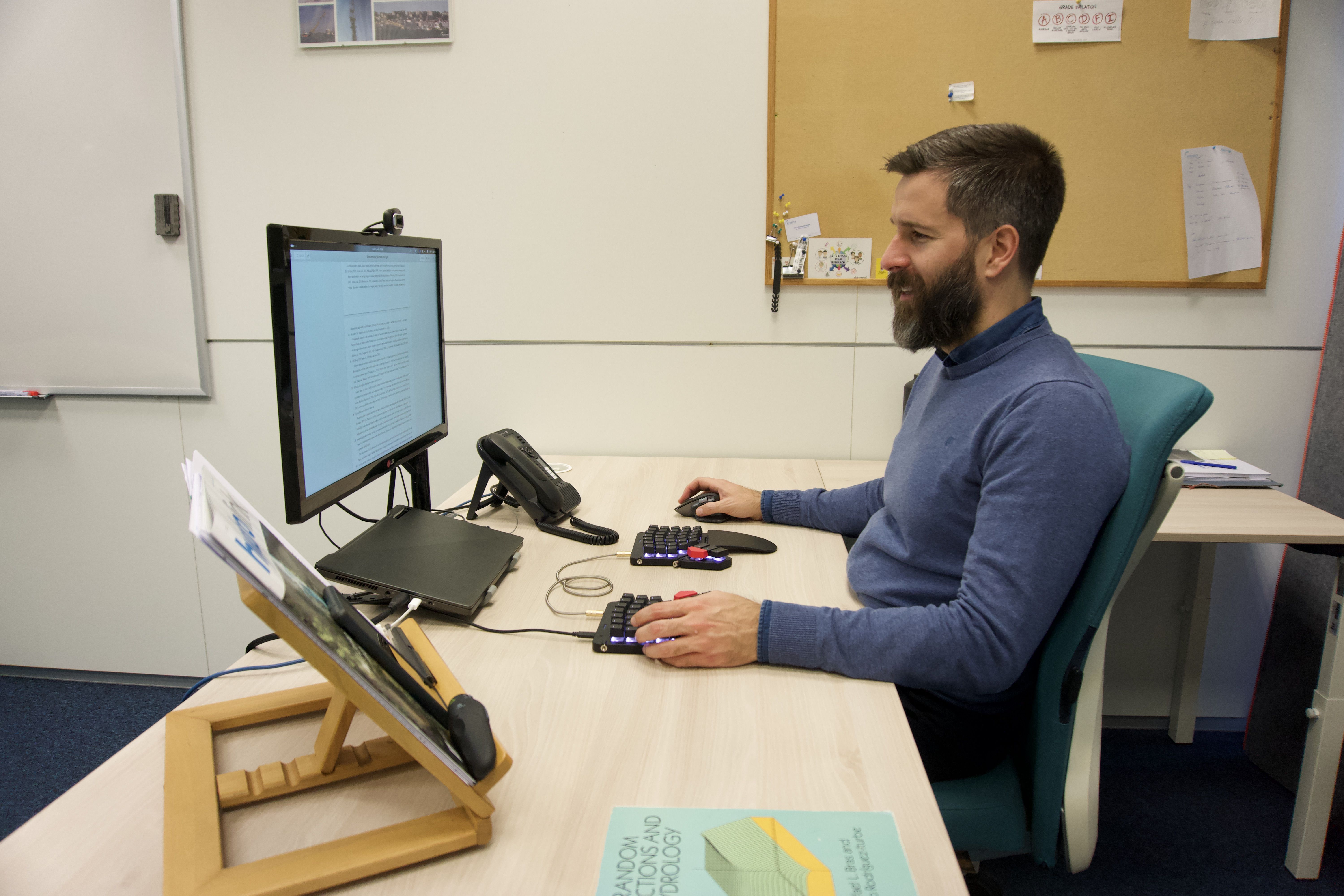
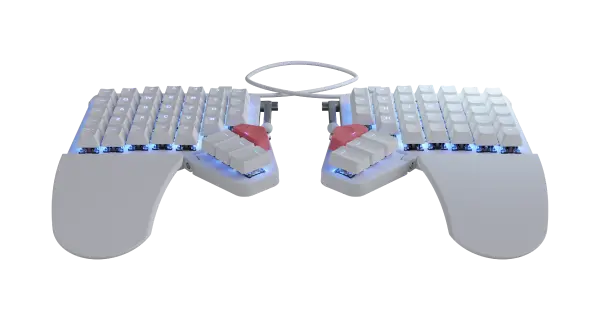
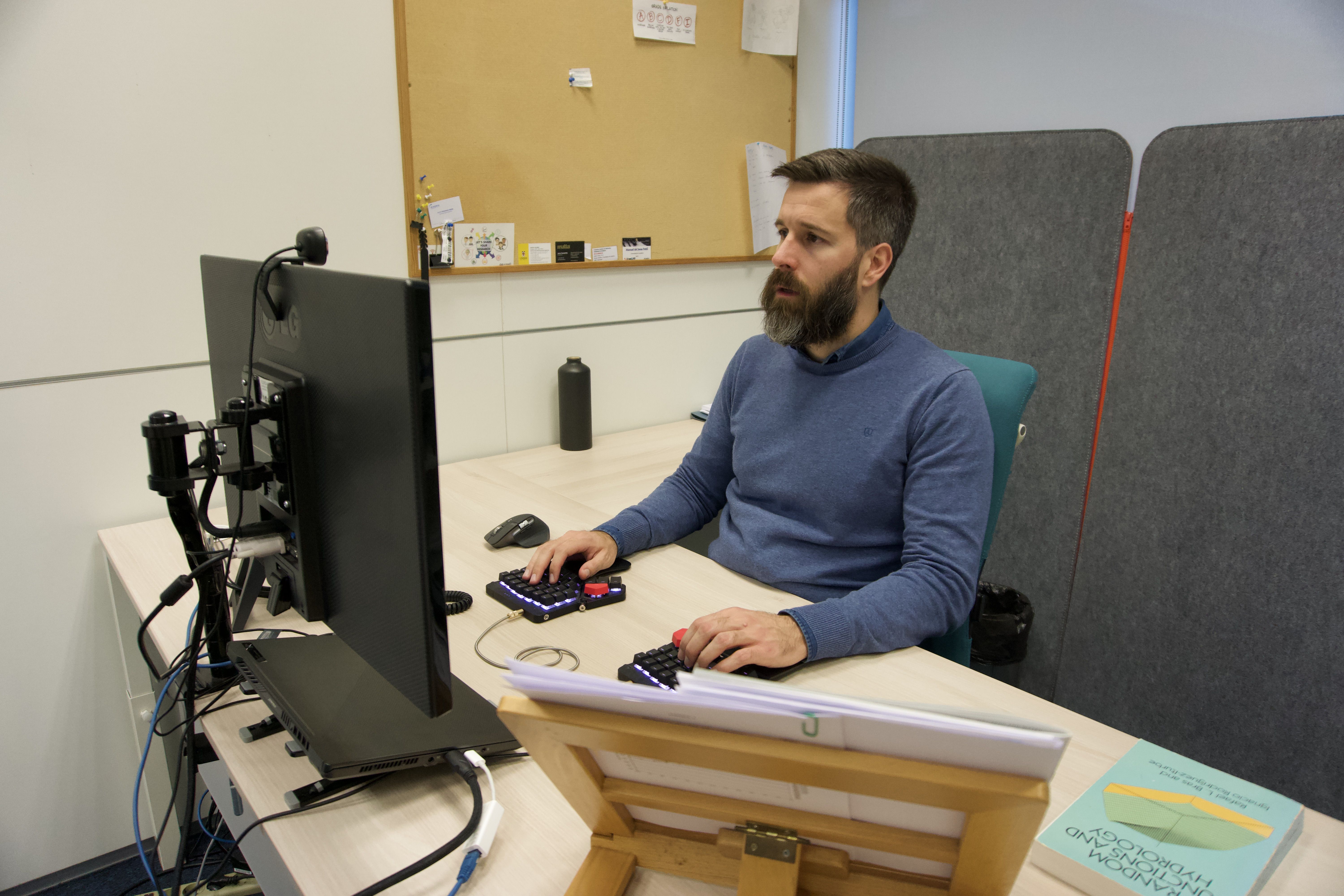
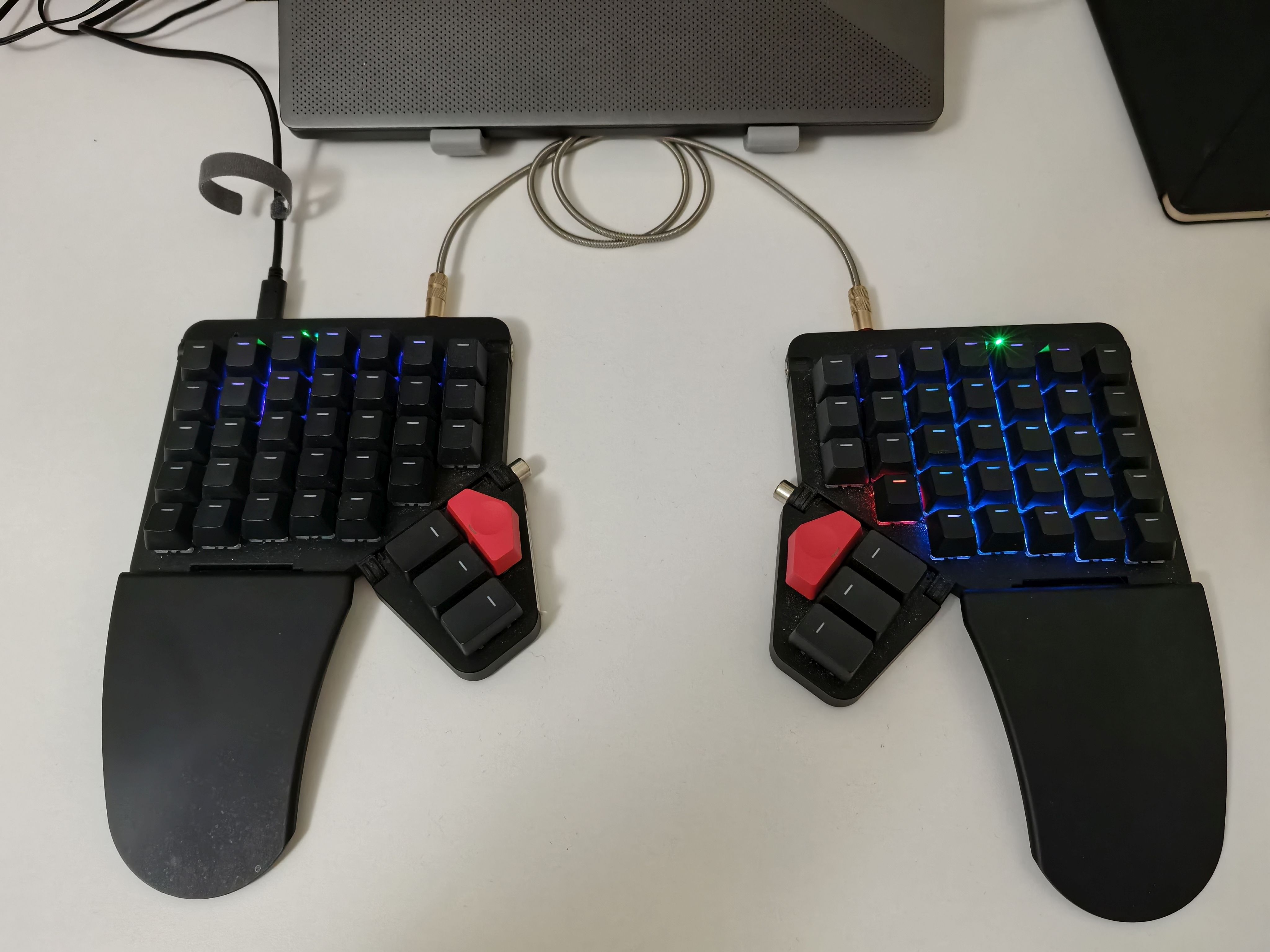
I have two Moonlander keyboards. Both black with unmarked keys, one with Cherry Browns and the other with Cherry Blues (this latter one is my favorite). I tried a keyboard with Chocs, but didn't really get used to it. It was also smaller than the Moonlanders, and I do prefer to have some extra keys around.
An important hardware piece is my Huawei MatePad Pro 12.2 tablet. I like handwriting a lot, but before buying the tablet, I was losing my notes all the time, so losing a lot of my ideas and developments. The Huawei tablet is really good for writing by hand, and I synchronize my notes to my workstations, so basically, this way, I can centralize all my efforts into my hard drive and never lose an idea anymore.
And what software?
Most of my time is devoted to writing things, so after many iterations, I ended up using Emacs. I use it to program (mostly Julia and Python) and to write documents (Org mode, markdown, quarto and LaTeX). Lately, I have even been able to configure it to read and write email, which has improved my productivity a lot.
I also use Podman, since most of my data analysis and scientific software development is done within containers. I also use Jupyter Notebook as my main data analysis tool.
OnlyOffice has become a must to be able to interact with people who use Word for document generation. I have always used, and still use, LibreOffice, but OnlyOffice has better compatibility with Microsoft's software. Indeed, OnlyOffice allows me to even use PPTX files almost without any modifications.
Within the software that I use, a very important mention must go to Tailscale, which has allowed me to create a private VPN where I connect my devices and can, basically, connect to my workstation from anywhere using my laptop. In this way, I have access to all my files easily, without relying on cloud providers. It has really changed the way that I work.
What’s your keyboard setup like? Do you use a custom layout or custom keycaps?
I have very simple needs, and so I use a simple keyboard setup. I use the Moonlander flat, and that is it. It allows me to spread my hands and keep my shoulder blades tucked it. Since I started doing this, I have reduced severely my shoulder and neck pains. Just for this, buying the Moonlander would have been a more than worthy decision.
However, being able to create my own layers has proved very useful. My main layer is a QWERTY one, with a couple of tweaks that makes my life easier (location of Ctrl, Space, and Return, for instance). Then, I have a second layer with all the symbols that I may need, organized in a way that opening symbols are on my left hand, and closing symbols on my right one.
There is a smaller third layer with some additional keys—Fn keys mostly—that I use not so often, and that is it.
What would be your dream setup?
I am very close to my dream setup, to be honest. I would say that my dream setup would be having a very lightweight tablet that could be used as a laptop. Ideally, the tablet should have Linux. Nowadays, I emulate this behavior by carrying both the tablet and the laptop, but if I were able to fully merge both devices, I would be really happy.
My workstations are already all that I can dream of. Probably, the only piece that would really make me feel like I am really dreaming would be to have priority access to a HPC cluster computer any time that I needed it. With that, I could stop dreaming and just live the digital life.