





The people who use our boards.
426 interviews since 2018




Brian
Sullivan
Pentester
Who are you, and what do you do? What do you like to do outside of work?
Hey there! I’m Brian. I’m a dad, a husband, a gamer, and a hacker. I live in the mountains of Northeastern Pennsylvania with my lovely wife, two awesome kids, and a big, one-eyed, German Shepherd mix we rescued, named Butch.

I work in cybersecurity as a pentester (short for penetration tester, but I do love pens as well!). Pentesters help secure applications, systems, and networks by hacking into them, then reporting how they did it so it can be fixed. Rinse and repeat.
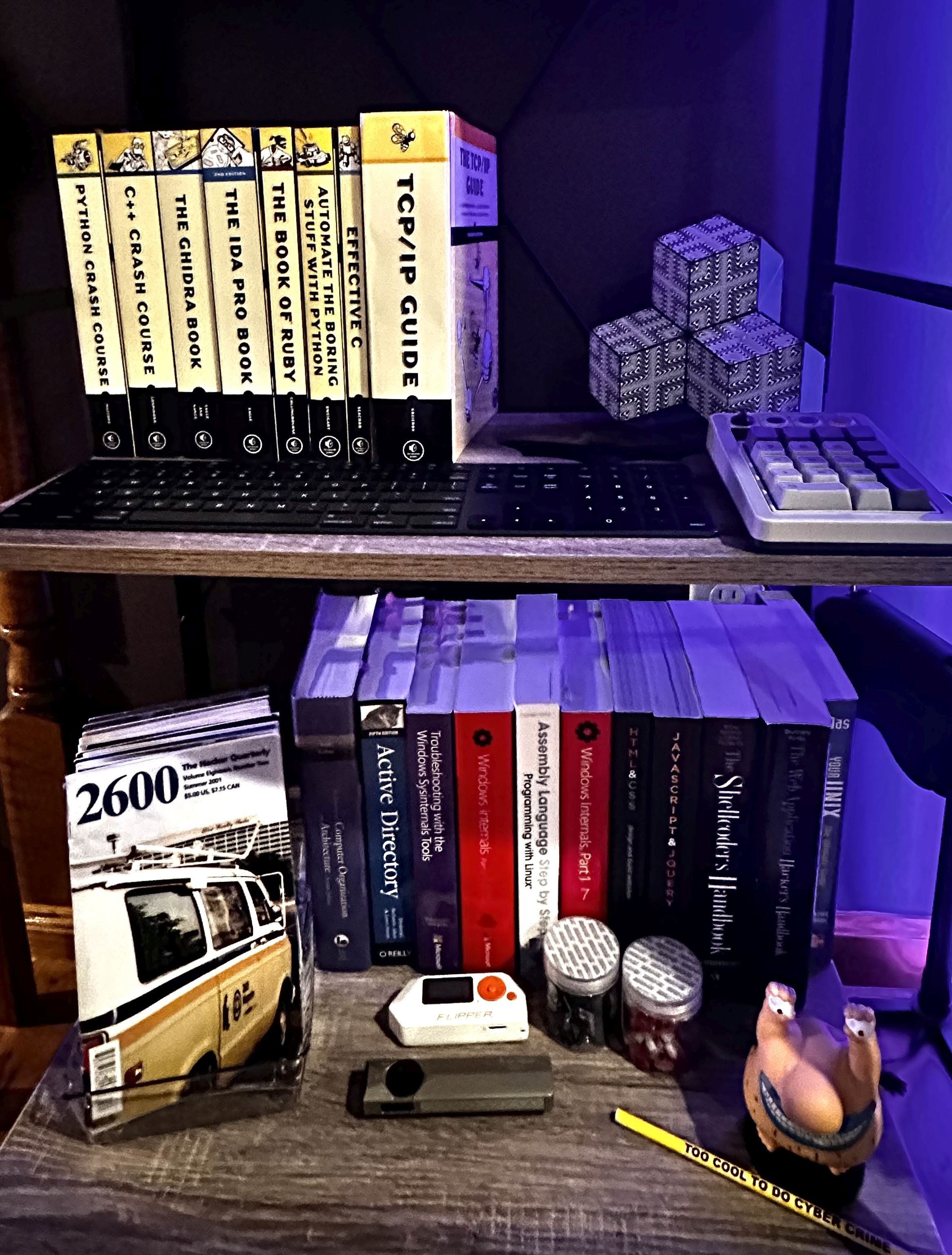
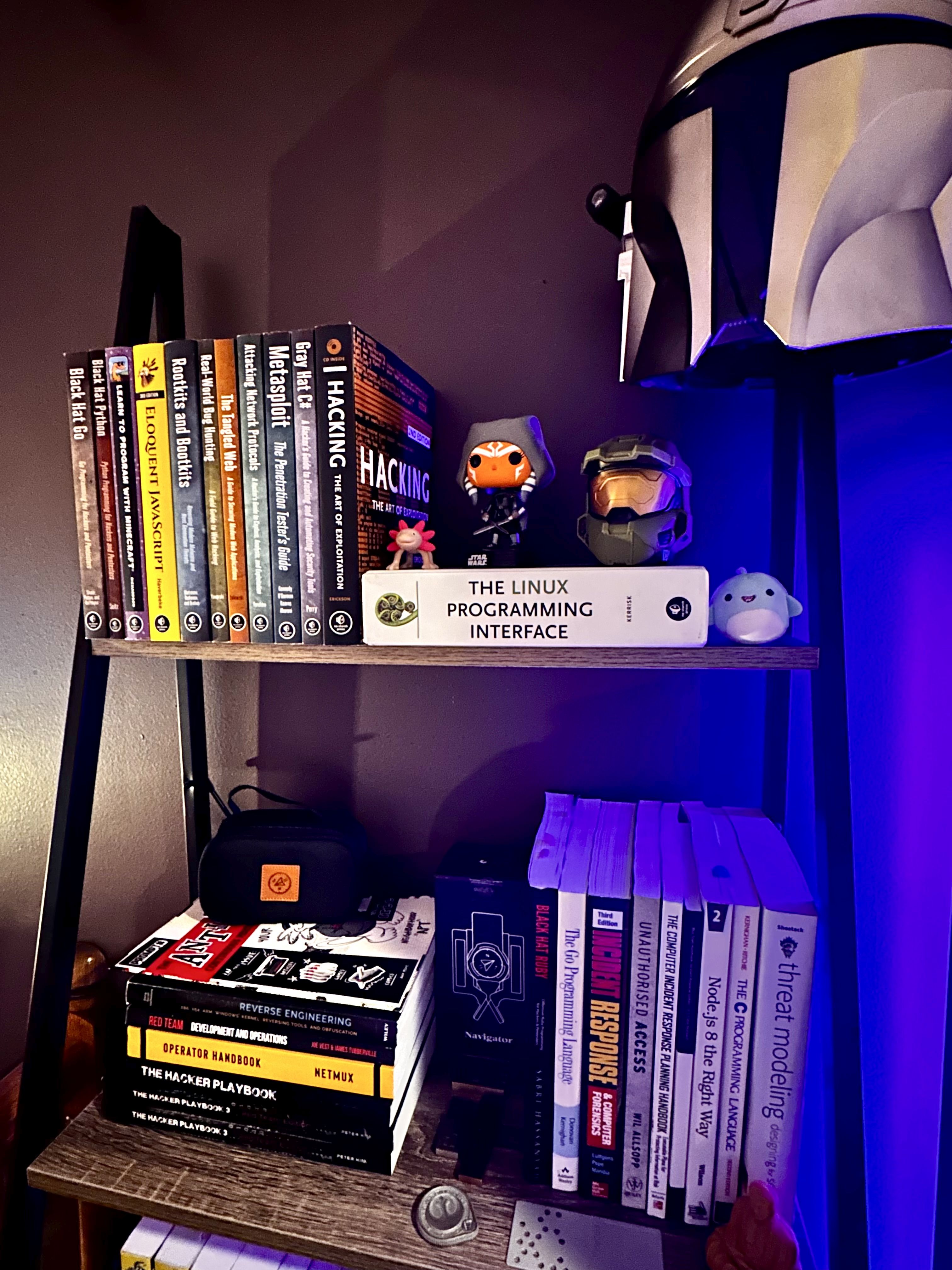
I got into hacking early, obsessed with things like 2600 Magazine, pay phones, lockpicking, Linux, and just obtaining hacking knowledge. I went down the rabbit hole of zines, questionable message boards, IRC, and anywhere else you might find hackers sharing info, and I never really came back out. Things were different early on. Hacking was not a proper career path, resources for learning were hard-earned, and the term “hacker” might as well have been next to “criminal” in the dictionary.
My first hack was around ten years old, brute-forcing the password (aka guessing) on some ancient dual-floppy “laptop” my father had that was as big as a desktop is now. Unsurprisingly, my first time being grounded for hacking was around ten years old due to hacking some ancient dual-floppy laptop.
I bought my first real lockpick set (not built in a cave from a box of scraps) from a weird mail-order catalog called Sovietski. It was kind of like the SkyMall of Cold War spy gear and surplus. I never stopped guessing passwords or picking locks, but I have gotten some better gear!
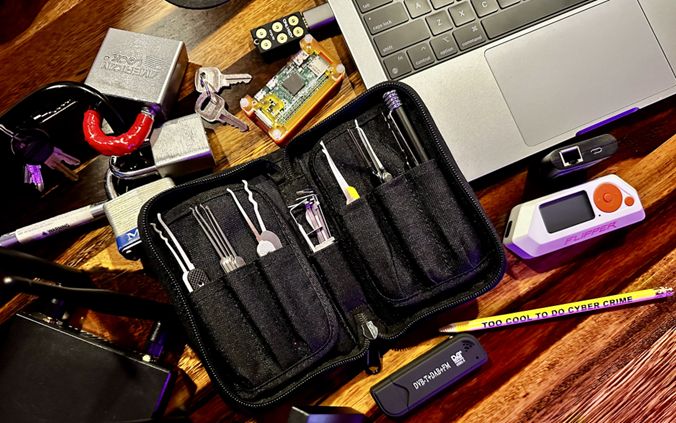
While my hobby had me up all hours drinking Jolt Cola and hacking the planet, I still needed a job. Through an uninteresting series of events I found myself to be a copy editor. I love to read, and it turns out I have a knack for long periods of intense focus on lengthy text, while keeping attention to detail...go figure. My quest for hacking knowledge was a bit like I had been training to read large amounts of text quickly and process as much detail as possible, not to mention the late nights working to find security bugs by just reading tons of code. I stayed in the eLearning world copyediting, and eventually content writing, for around eight years. During that time I'd be reviewing documents during the day for work and hacking away at night for myself.
Then one evening, my wife Liz and I had a chat. I was good at copy editing, and the work was steady, but I wasn’t very happy. I wanted to make a jump into the IT field with the goal of working up the IT ladder from tech to sysadmin and, with any luck, become a pentester (which was a proper job at this point). We made a game plan that included looking for any kind of Linux-relevant jobs and working on security CTF challenges and labs, while also trying to earn some industry certifications. I found a job as a Linux technician, and well over a decade later am pretty happy with how things turned out.
Turns out being super passionate about a specific thing gets noticed, even if you may not realize it. With a bit of luck and a random act of kindness, a conversation happened somewhere in the universe that started about cybersecurity talent, mentioned a team needing another pentester, and probably ended with something close to “I know a computer guy who loves that stuff, want to have a chat with him?”. Some more kindness, and a lot more luck, and my favorite thing to do turned into my profession.

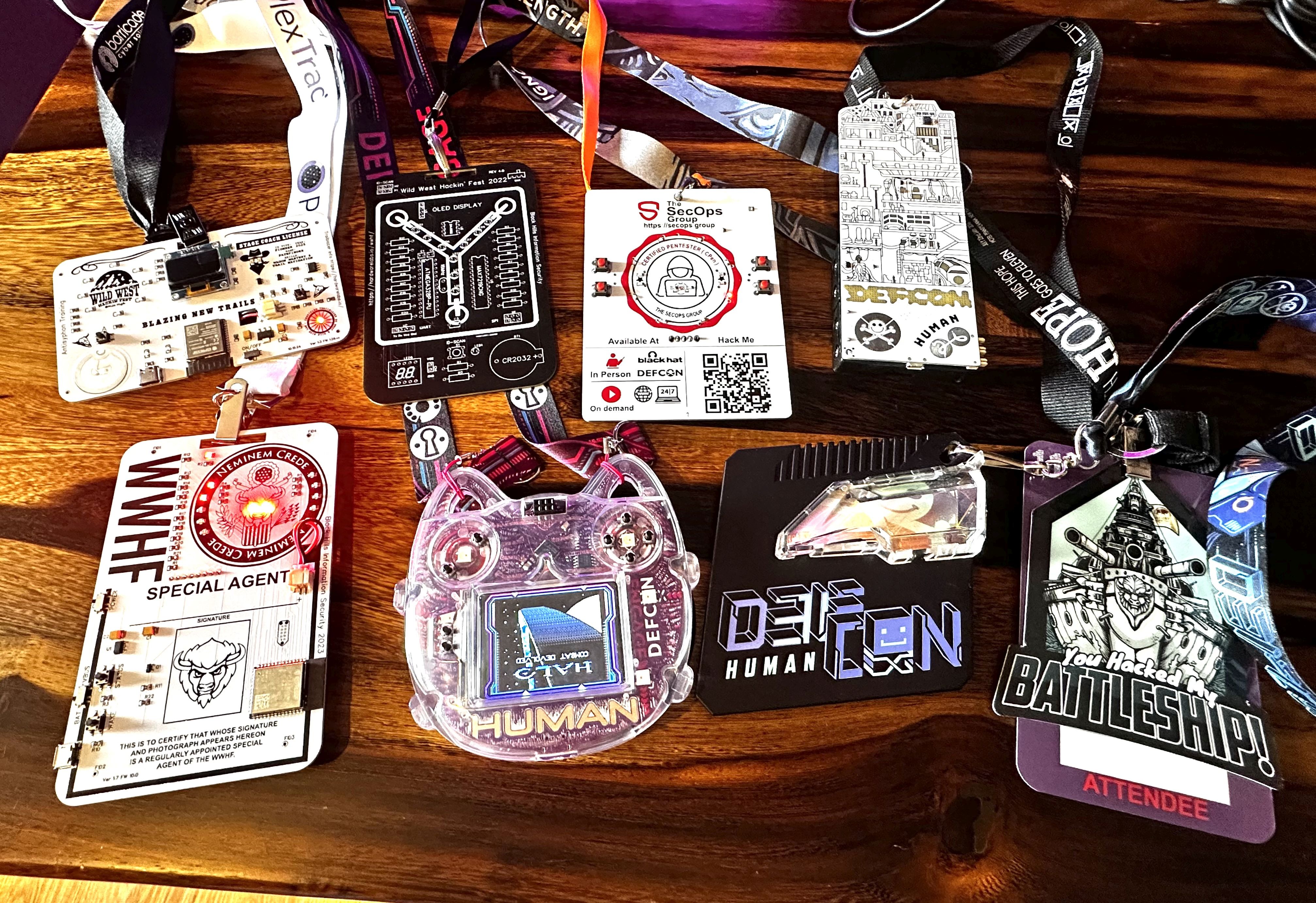
I stayed in consulting, flying around the country to hack all sorts of things for different clients. It was fast-paced, with no shortage of work—from mom-and-pop flower shops to Fortune 50 enterprises. All manner of targets, like kiosks, network equipment, industrial control systems, the mobile tablets you might use at medical visits, theme parks, ancient mainframes, tons of apps, banking systems, IoT devices, and cloud services, to name a few. You can learn a lot real fast if you want as a pentest consultant, and that was exactly what I had asked for. Great success!
These days I spend my time doing the type of work that has me bouncing between bleeding-edge modern technology and crusty old legacy stacks you wouldn’t believe are still used today.
Outside of work, I’m a family guy. My wife and kids are my world, and a lot of what we do revolves around gaming, building things, and little day trips to our favorite spots or finding something new.
We're pretty big into gaming, and there’s a shared love of retro gaming especially. There’s an awesome retro arcade in Scranton, PA called Bartari, which we love and is not too bad of a drive. They have an awesome lineup of arcade and pinball machines, and they even use real quarters!

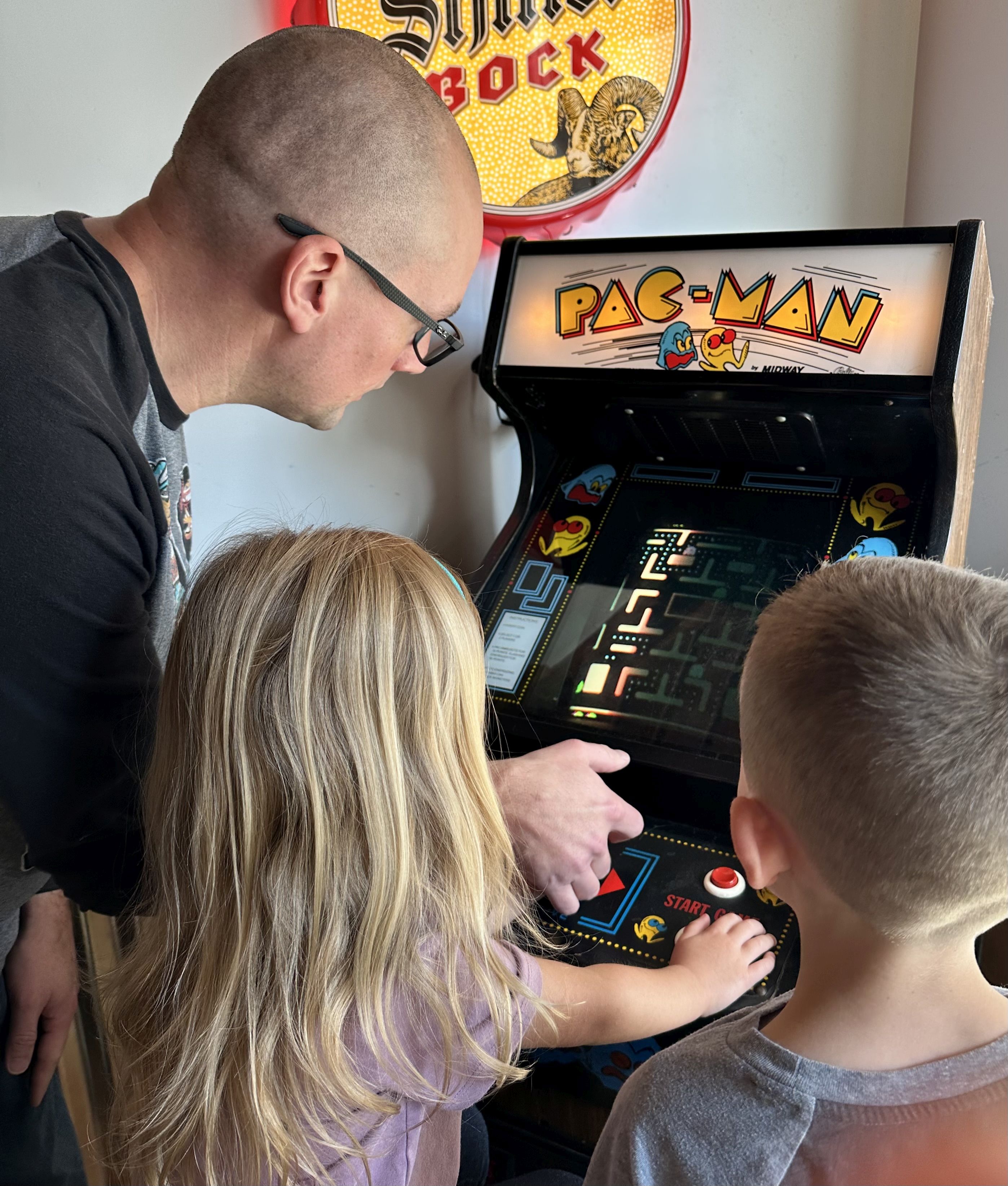
The Strong National Museum of Play in Rochester, NY is probably our favorite spot. It’s an epic hands-on museum for gamers. Explaining the old technology to my kids, teaching them some nerd history, and destroying them in some classics is just a ton of fun (don’t judge me, all are equal on the Mario Kart track!)

Rochester is also home to the only Nerdvana restaurant on the East Coast.

My favorite solo activities are hunting zero days and mowing grass. A zero day is a vulnerability the vendor doesn’t know about yet, so there’s effectively been “zero days” to fix it. Hunting them is equal parts fun and frustration, but it’s a serious rush when you find a publicly unknown critical vulnerability. I would have said “new vulnerability” instead of “publicly unknown,” but that’s not always the case. Not everyone plays by the same rules, and some zero-day vulns responsibly disclosed by researchers were already being actively exploited by threat actors. It happens.
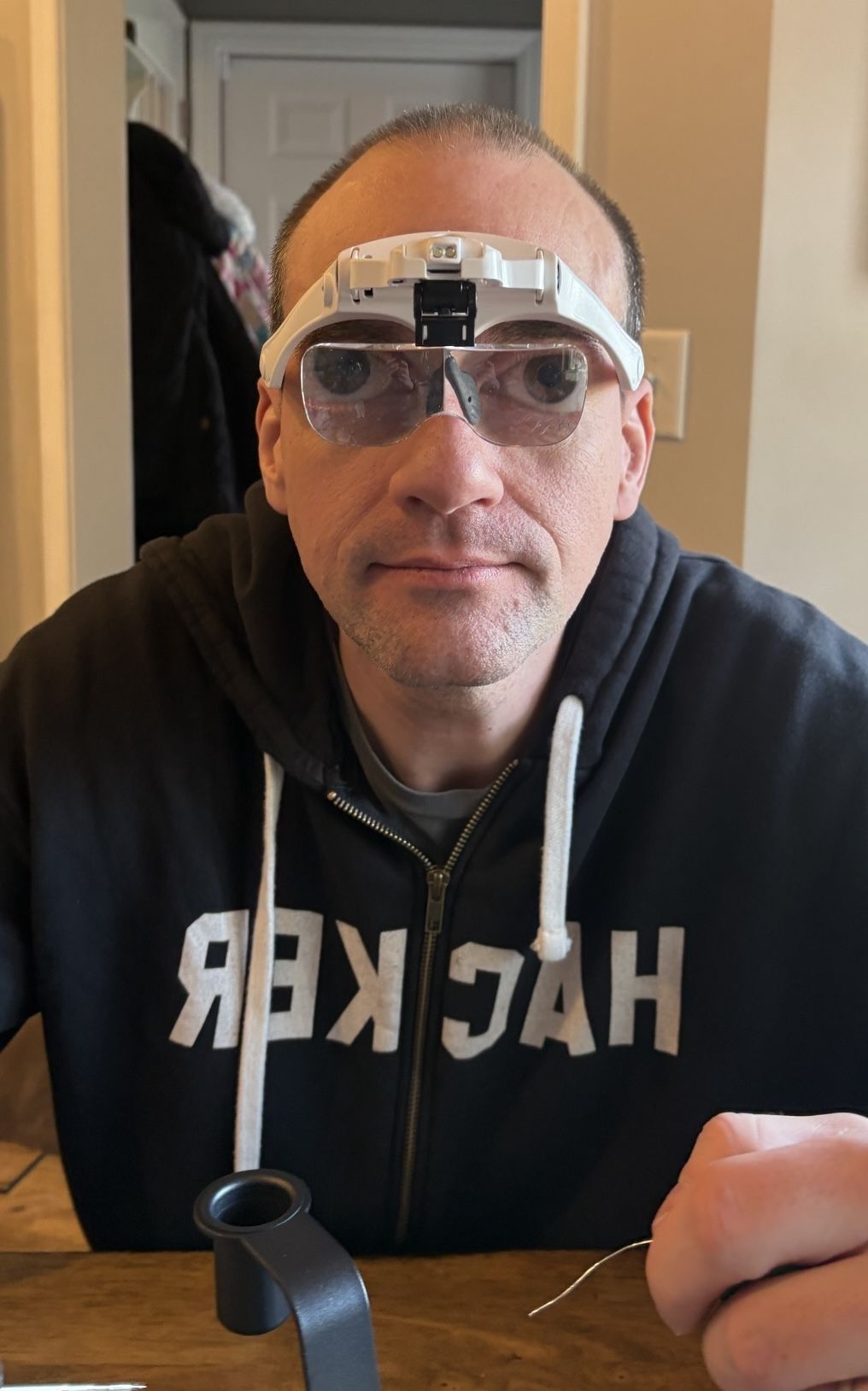
As for mowing, it’s my happy place. I have a lot of grass to mow, enough that it justified a decent commercial mower. I swear, there was no choice, I didn’t want to...really...okay, maybe I did want it. When I’m mowing there’s no choice but to be in the moment, surrounded by nature. Running a zero-turn mower, you tend not to daydream if you want decent-looking lines, so my noisy mind quiets down to focus on making nice stripe patterns. Being that mowers aren’t very friendly to humans, people tend not to bother you. It’s a little zen bubble where mindfulness and staying in the moment are rewarded with oddly satisfying lines in the grass.
So, you see, I do touch grass and I’m not sure why people keep telling me to go do that.
What hardware do you use?
The ergonomic journey has been a long one, with a lot of trial and expensive error, but I feel like I have finally found my happy setup.
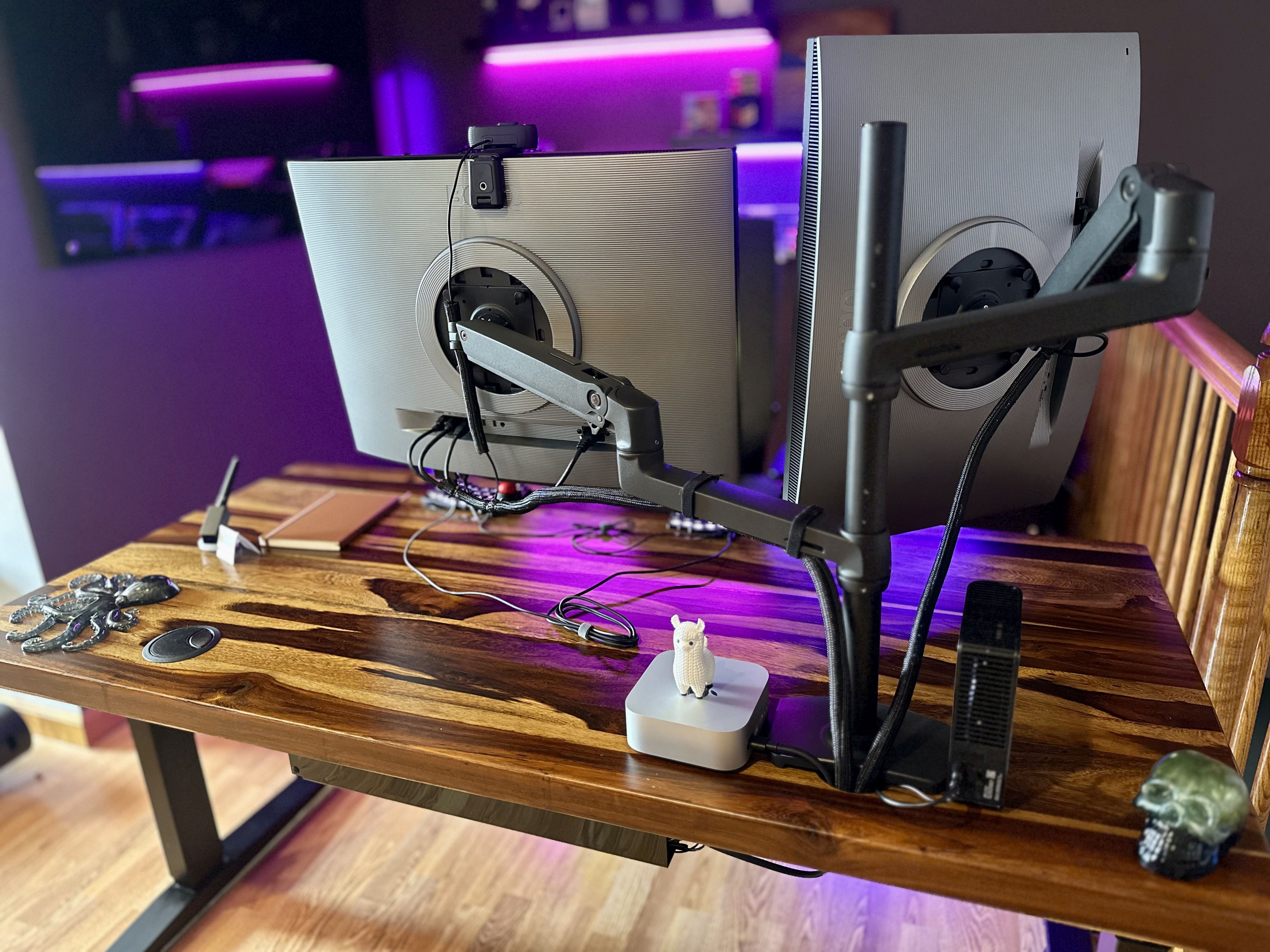
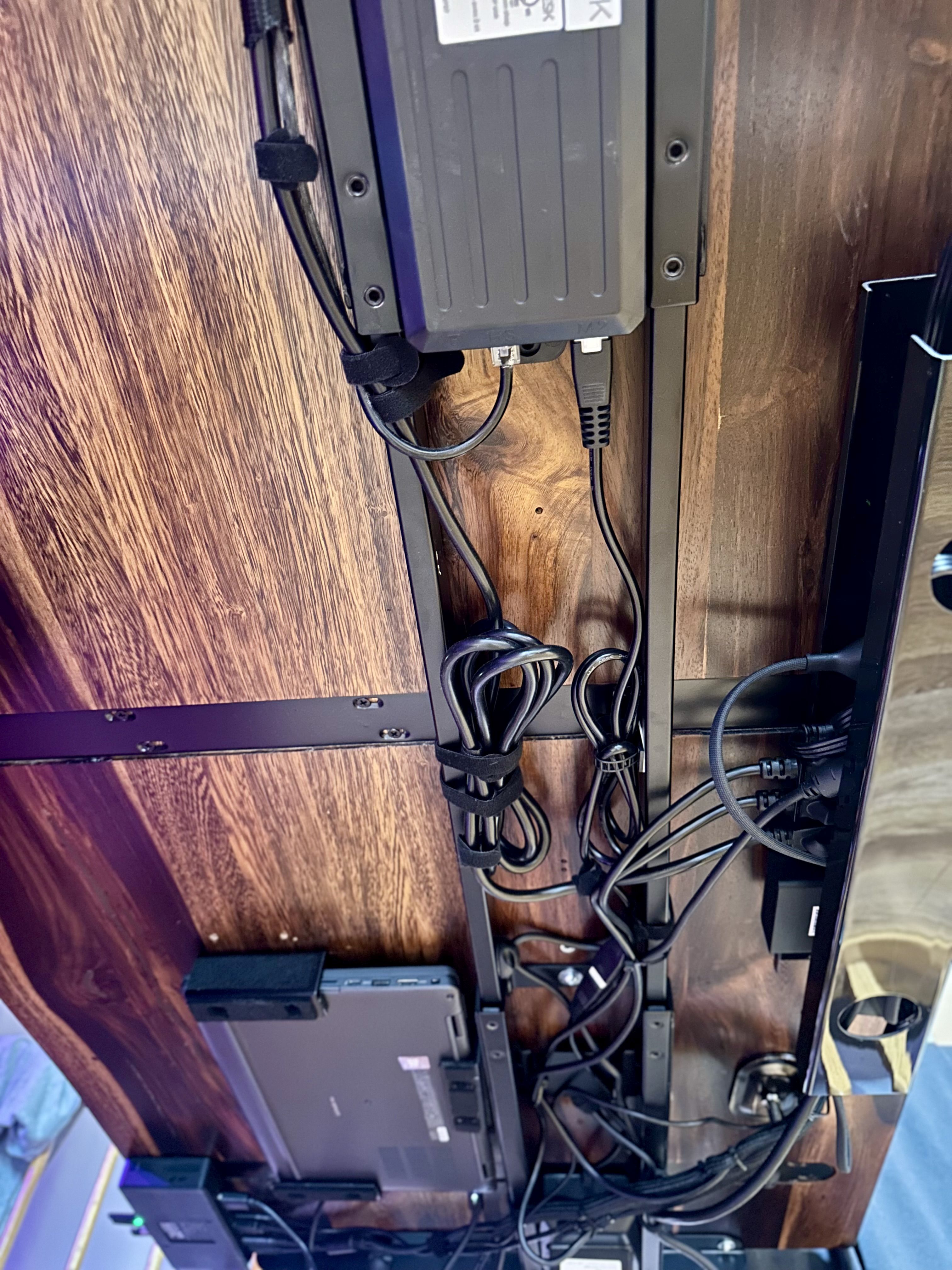
My desk is an Uplift Standing Desk v2 pheasantwood standing desk. I mounted some brackets underneath to tuck a laptop away, as I try to keep my desk minimal. If it’s on my desk, it either needs to be there or has meaning.
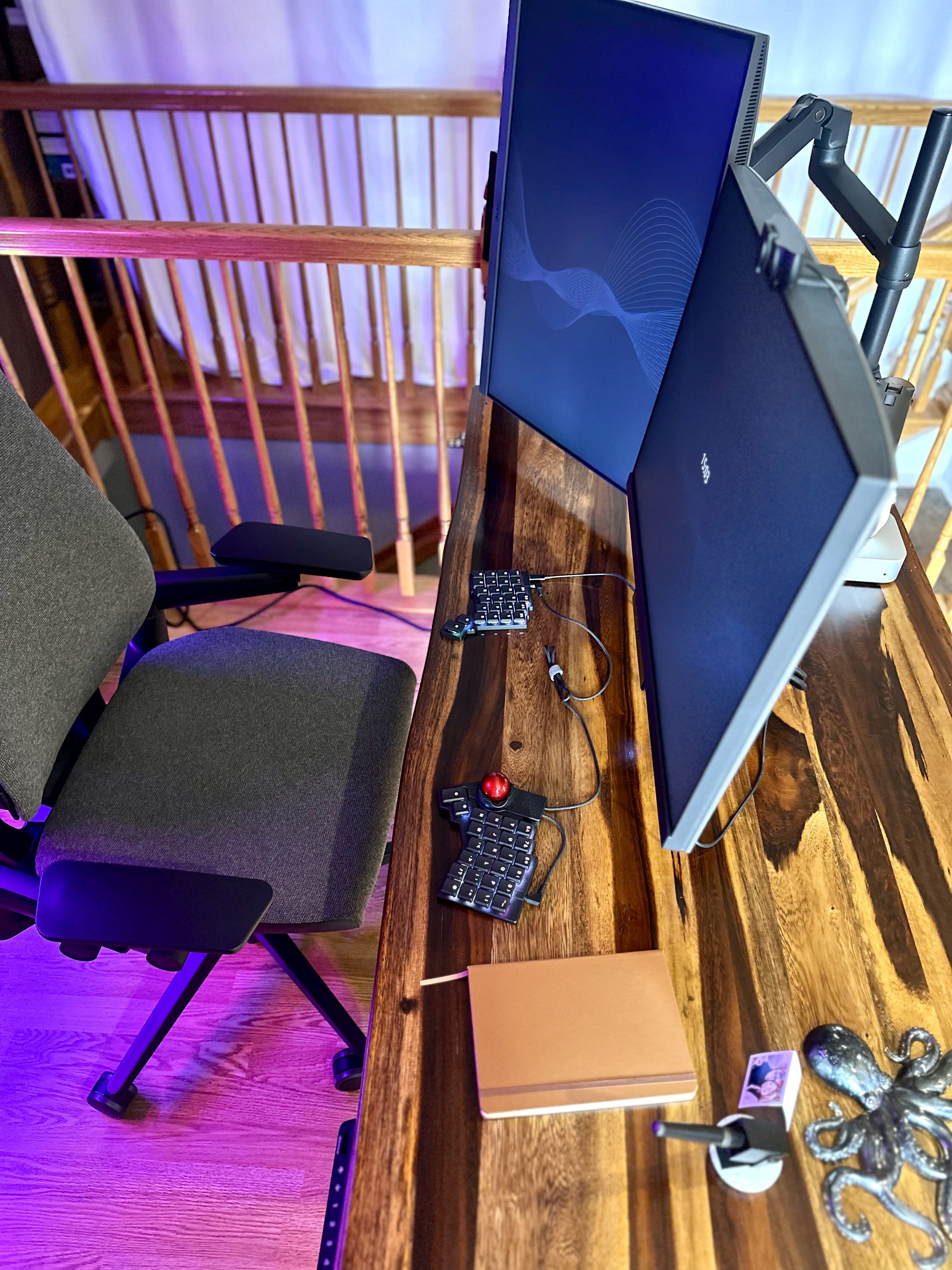
I have an Ergotron LX dual monitor arm mount holding two BenQ 28.2″ 4K+ 3:2 programming monitors. I bought these during the eyestrain phase of my ergo-adventures, and they are glorious. I love the vertical room of the 3:2 aspect, especially for code and streaming logs, coming from a narrow ultrawide previously. The built-in KVM with USB hub is also super handy.
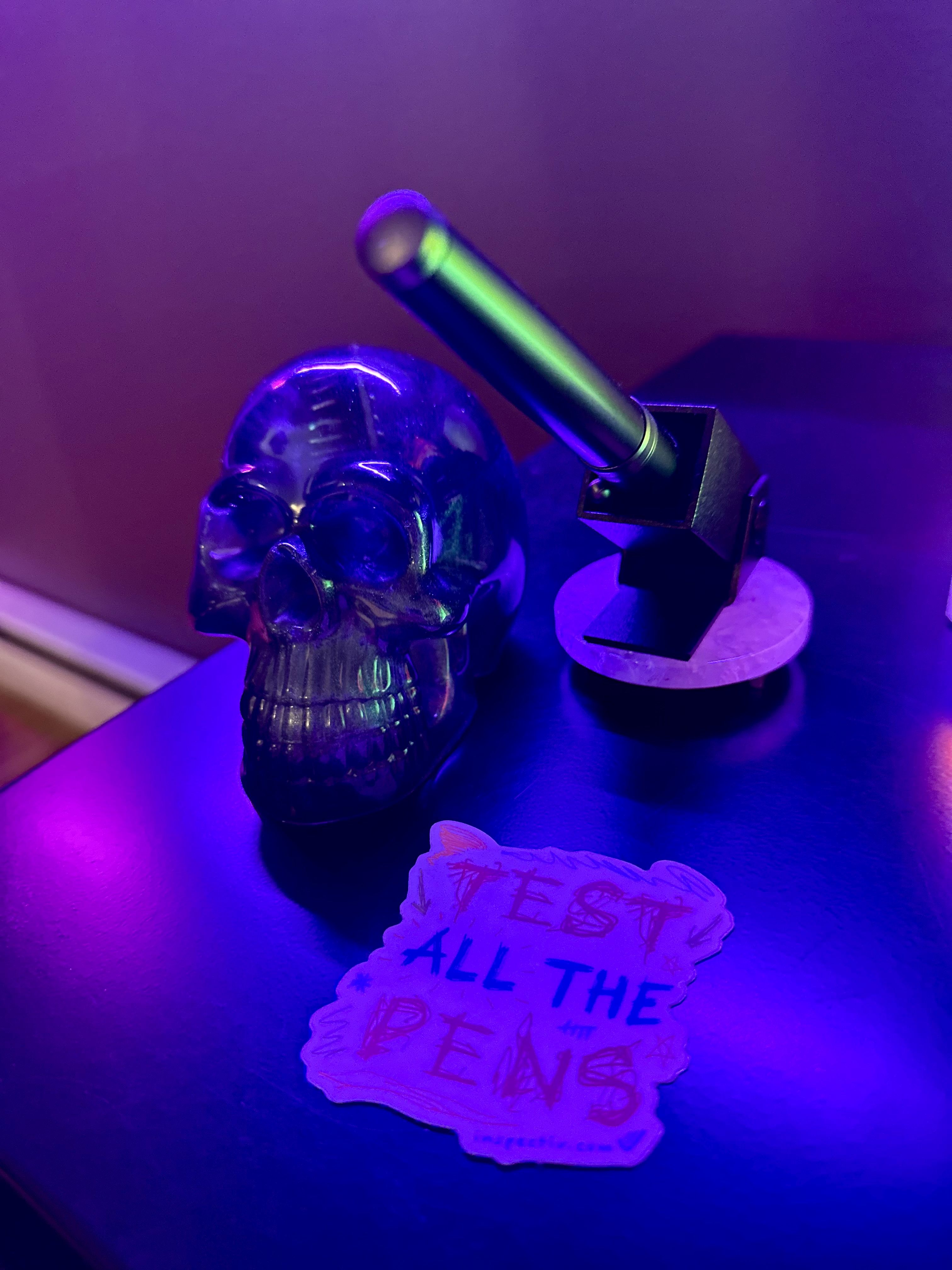
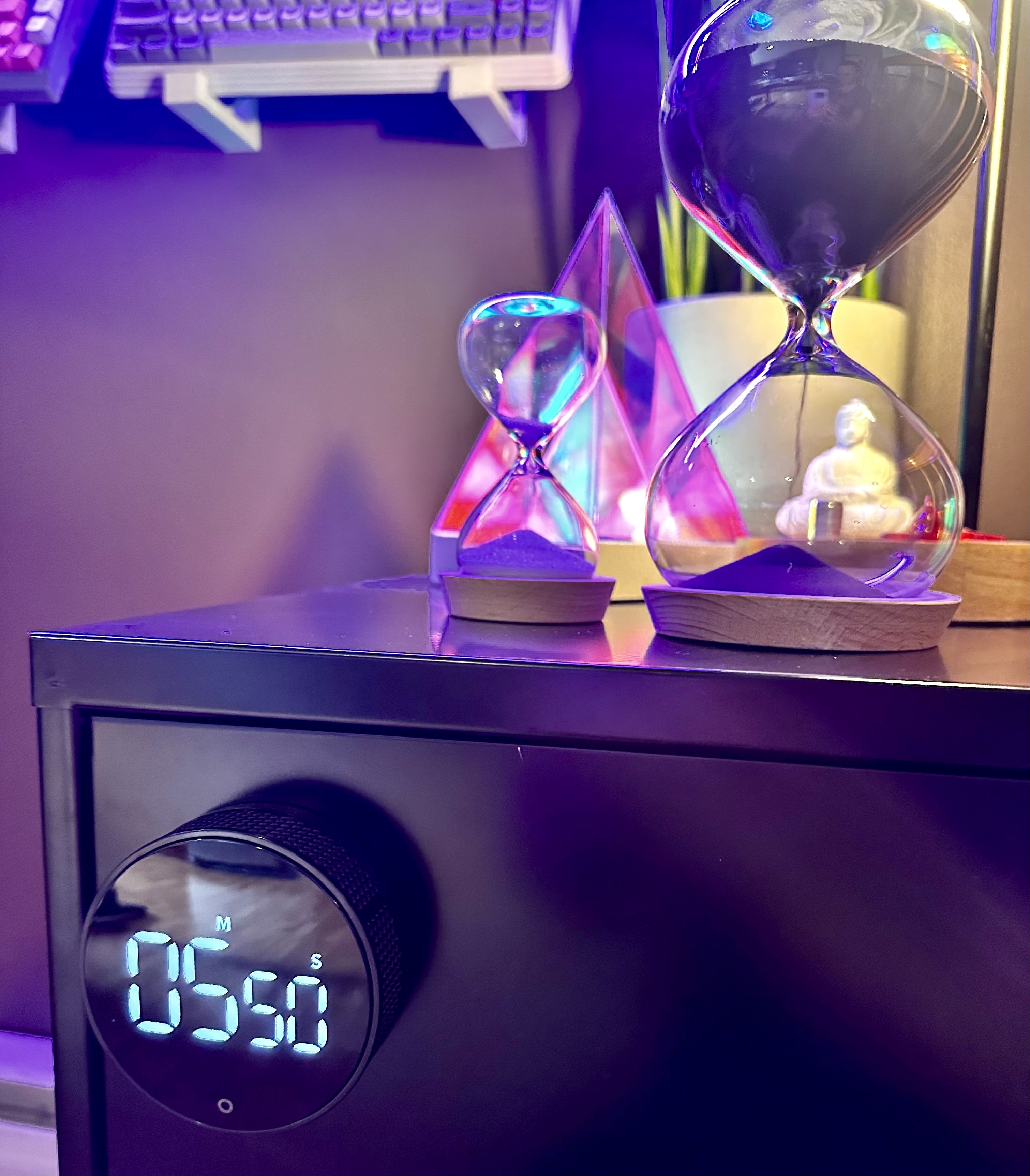
However, for any eyestrain enthusiasts reading this, the absolute single best piece of hardware I’ve found is a nice-looking $14 digital kitchen timer. The one I have is branded Avinia; it has a really sleek look to it, a big knurled rotating bezel to set the timer, and what I would call an “industrial E-Ink” aesthetic that I like. I set this timer, and when it goes off I can’t miss it. Then it’s stand, stretch, and look at something far away for a pause, then reset the timer with a touch. I tried using some fancy-pants hourglasses, but while they looked nice, they were too easy to miss when I got in the zone (or just ignored them). Yes, I realize I spent more time describing a generic kitchen timer than anything else.
My chair is a Steelcase Gesture that I got on sale for a significant discount. It’s still pricey, but when you spend this much time at a desk, it’s easier if you think of it as an investment. This is not financial advice.
The Steelcase Gesture is super configurable, and easy enough to change on the fly as needed. Everything is adjustable on this thing. The Steelcase is a relatively recent addition, so I can’t speak to longevity, but I can say I am very happy with it so far. I’m 6′3″ and it fits great, if any of the lanky crew reading are looking into chairs.
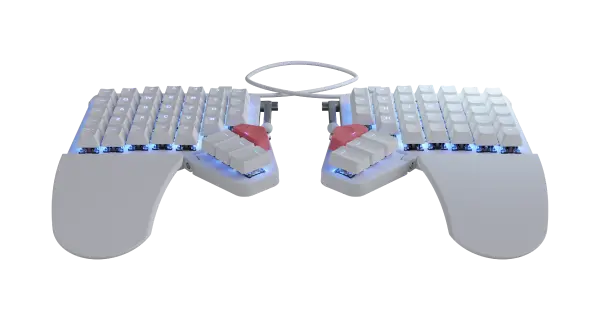
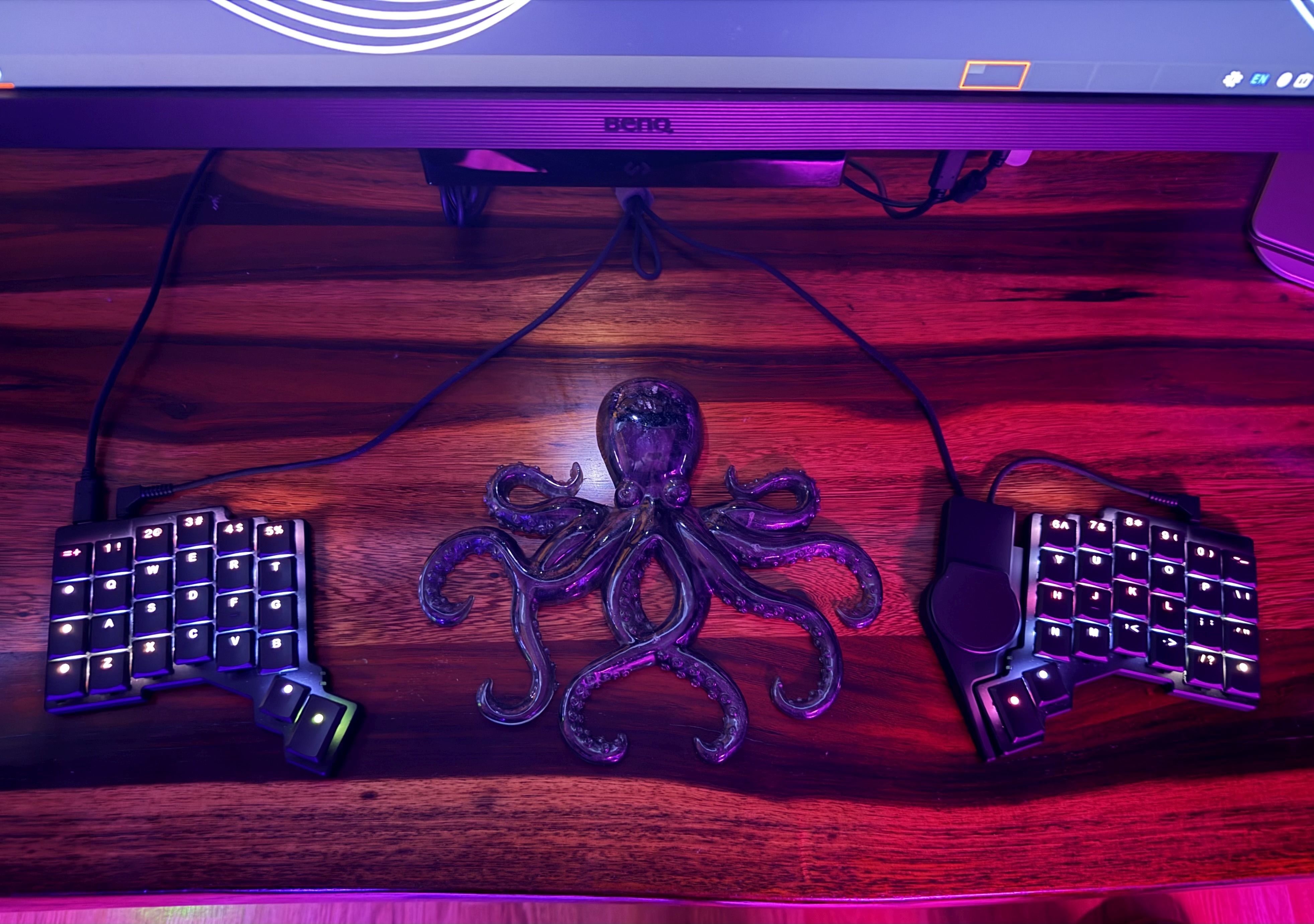
My primary keyboard and mouse setup is a Voyager with the Navigator trackball, and I really do love it (more on that in the keyboard setup section)!
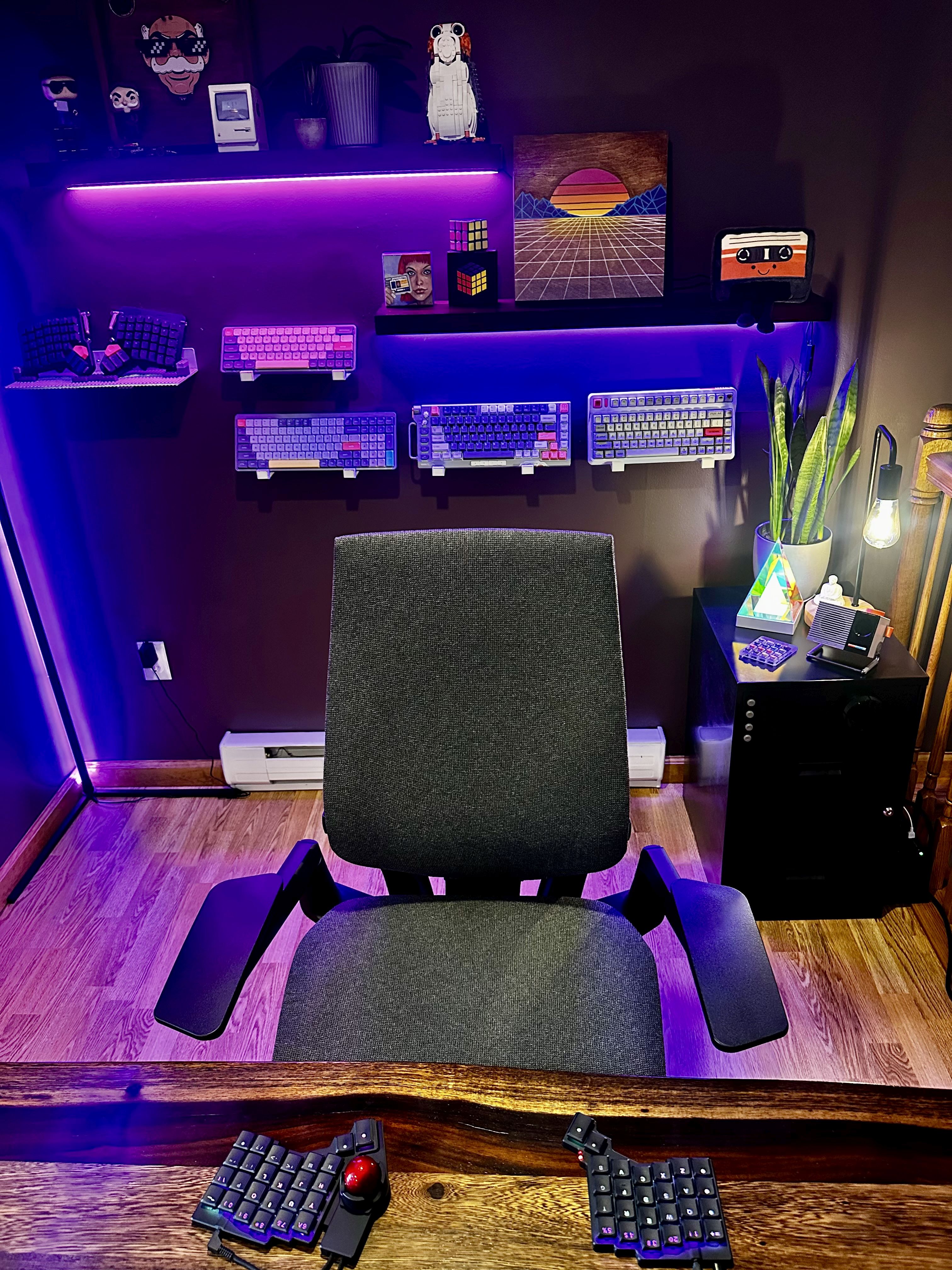
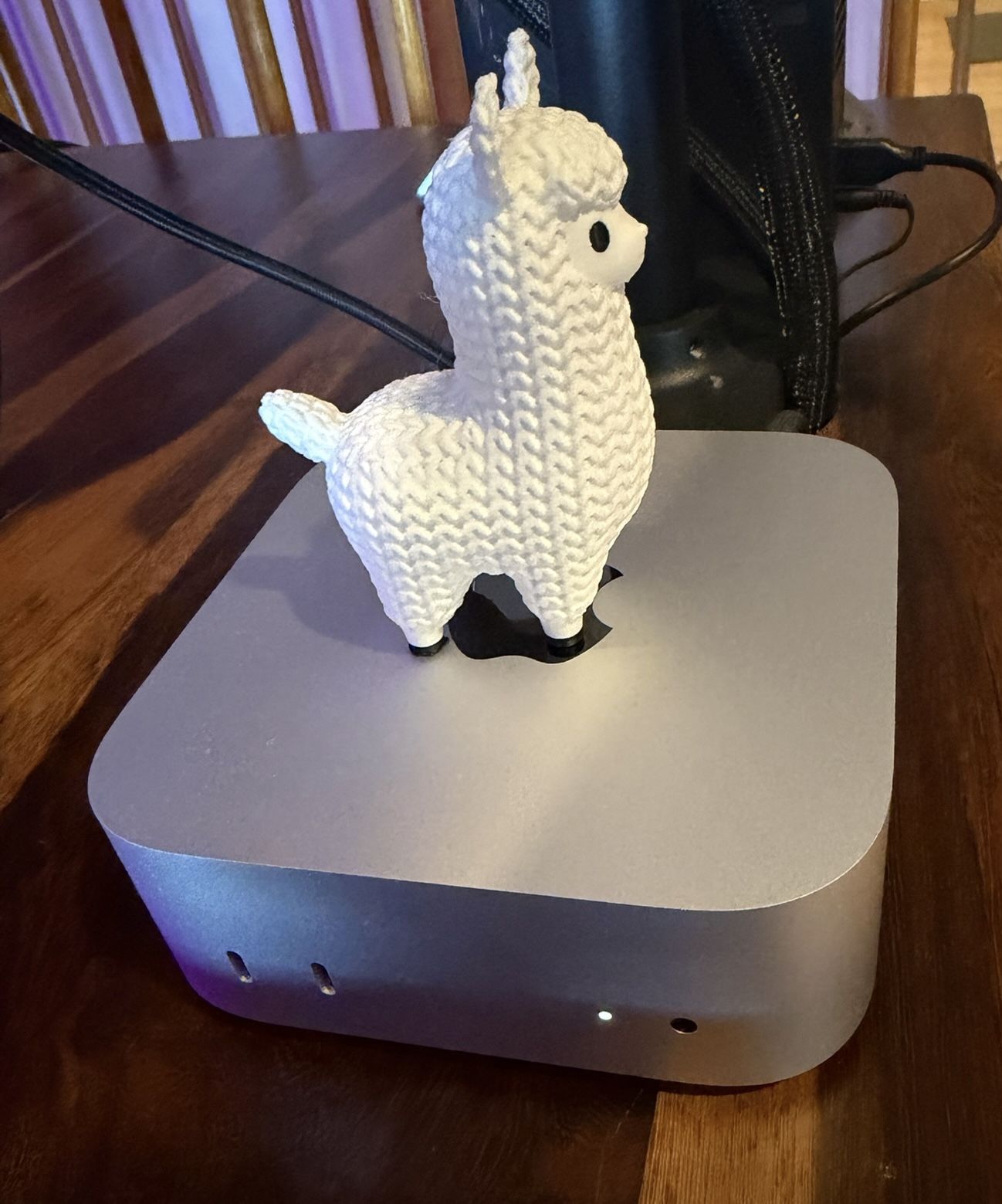
As for computing, I generally have a wide array of devices around me. Couple work machines for various architectures and purposes, an assortment of personal devices, all sorts of hardware hacking lab gear, as well as homelab stuff like an Intel NUC, a big server running Proxmox, a NAS, and an M4 mini with 64 GB of RAM I use as a little “llama box” for local LLMs and research.
And what software?
For software, I’m definitely terminal-heavy. I like tools that do a job, do it well, and whenever possible, look good while doing it. A few tools that I use constantly: Ghostty (terminal), Zellij (terminal workspace/multiplexer), McFly (better terminal history), ripgrep (grep but like, really fast), fzf (command line fuzzy finder), Starship (prompt), Neovim (editor), Helix (hipster editor), zoxide (smarter CD), Taskwarrior 3 (task tracking), restic (backups), and pretty much everything made by Charmbracelet. I could keep going, but I'll just mention that I’m a huge fan of nix as a package manager, even if not using NixOS. Nix makes it super smooth to spin up a declarative environment or try out new things without making a mess on the host system. The learning curve was rough, but can be a little gentler with Determinate Systems nix and their nix content.

For GUI tools, outside of the usual office software, my two most frequently used are VSCodium (mainly for source code analysis) and Burp Suite Pro (intercepting proxy for web hacking and other creative proxified endeavors). Honorable mention to Binary Ninja, a reverse engineering framework, for having such a rad UI/UX.
One caveat to the shiny tools is the nature of my job, as I land on a lot of different systems. Sometimes it’s a standard environment, other times it’s a long-lost technological artifact seemingly running on a toaster, or maybe a stripped-down IoT device running firmware from 84 years ago. So while I do love fancy tooling, I try to stay sharp with fundamentals. You still need to be comfortable on a system that gives you almost nothing to work with.
What’s your keyboard setup like? Do you use a custom layout or custom keycaps?
My keyboard setup has been evolving alongside my ergonomic survival story. I started with the Moonlander (and admit I failed to adapt several times before it stuck) as my primary board, and spent the last few months adjusting to the Voyager with Navigator trackball. I had been dealing with enough hand, finger, and shoulder pain that I’d mostly given up on using a normal mouse. On the Moonlander, I had HJKL mapped for mouse movement, which actually worked well, but I still had a trackpad nearby for the inevitable presentation where I wouldn’t be able to grab a tiny window edge or something. So when I saw the Voyager with the Navigator Trackball, it was an obvious match for me. I am also really excited about the Navigator Trackpad in the works!
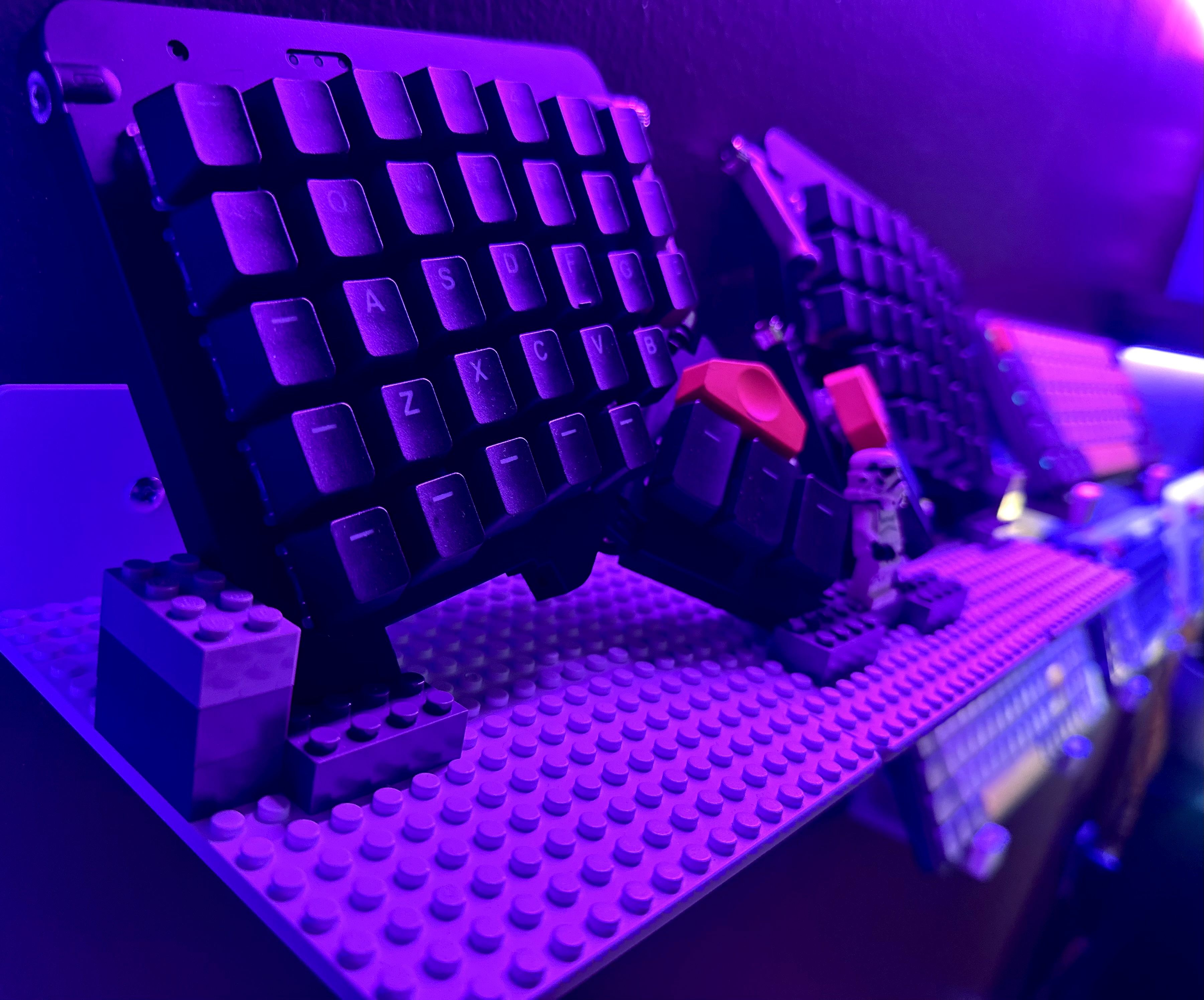
My layout is an endless work in progress, but it’s pretty tame. I keep it familiar so I can still rotate my regular boards without too much adjustment. The real magic for me is that customizations live in the hardware. As a pentester, homelab enthusiast, friendly neighborhood IT guy, and general tinkerer I end up on all kinds of devices. Having a consistent keyboard and mouse setup regardless of what I’m plugged into is magical.
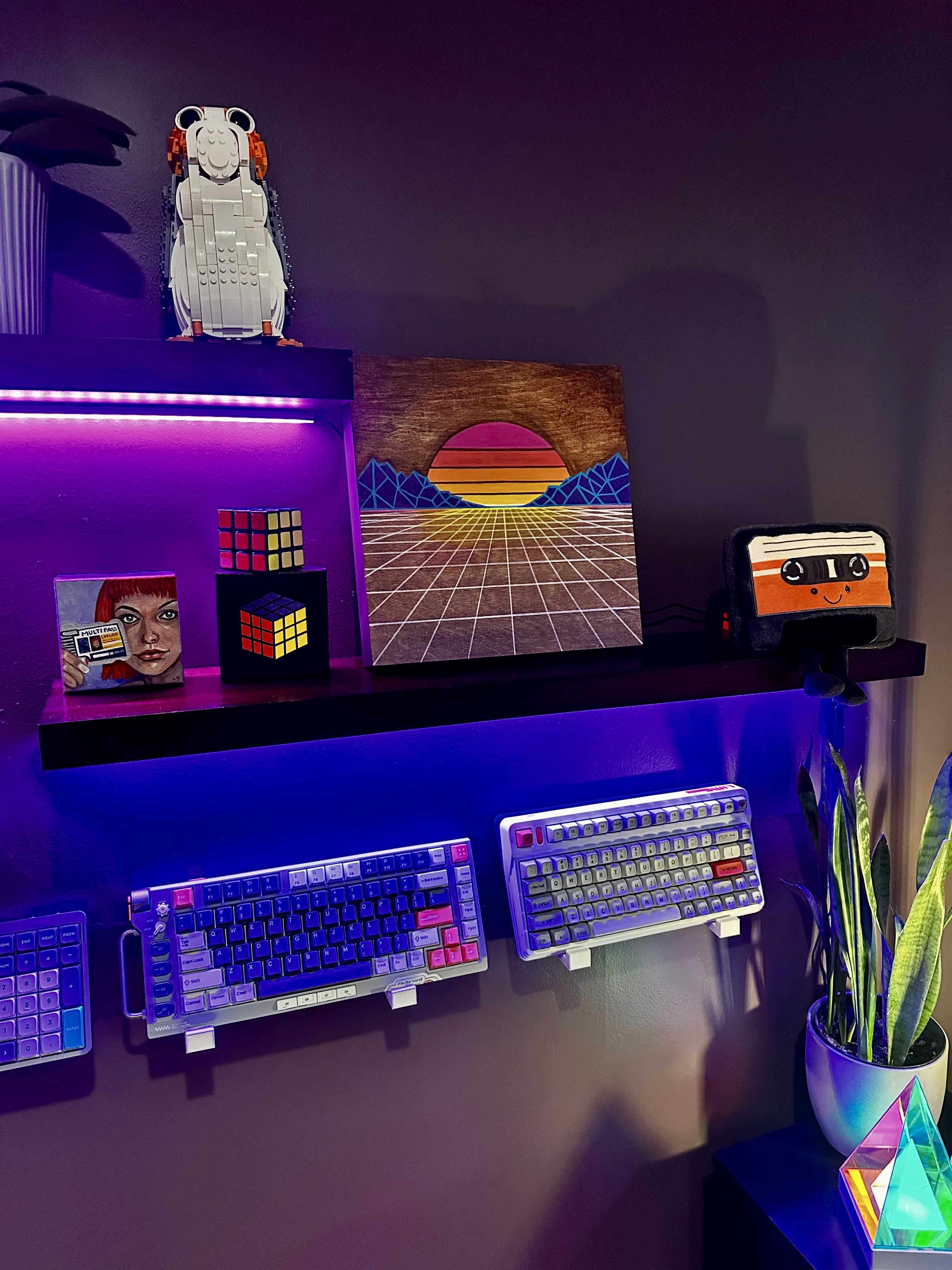
What would be your dream setup?
This really is my dream setup from an ergo and hardware perspective. If I could add anything, it would be more of my wife’s art on the wall. She painted the vaporwave sunset, Rubiks cube, and Multipass art for my recent office upgrades. I think a vaporwave version of Johnny 5 would be pretty rad!
Oh, and maybe the Navigator trackpad when it comes out...yeah, definitely that too. It’ll really tie the room together.
Can you recommend a few books, movies, TV shows, or games (digital or otherwise) that you’re quite into?
Definitely! Here’s two from each category that might be new to someone. (I didn’t write all the descriptions.)
Books: Some older cyberthrillers
- Daemon by Leinad Zeraus and Daniel Suarez (2006). A self-replicating computer program (a “daemon”) activates after its creator’s death, initiating a chain of events to dismantle modern society and build a new world order.
- The Blue Nowhere by Jeffrey Deaver (2001). Good hacker vs extremely evil hacker.
Shows: A brilliant tech-based show and a hilarious comedy series
- Halt and Catch Fire—A renegade trio—a visionary, an engineer, and a prodigy—risk everything to realize their vision of building a computer that can change the future.
- Letterkenny—This comedy series showcases the antics of the residents of Letterkenny, a small rural community in Canada.
Games: Family-friendly games we’ve had a ton of fun playing (and something cool)
- Ding Dong XL—We play it on a Switch, but it’s on Steam too and just always a blast cause anyone can pick it up super quick and it’s fun watching people get obsessed with it.
- Sneaky Sasquatch on Apple Arcade slightly reminds me of Untitled Goose Game, and it’s hilarious listening when the kids play this one. Sasquatch has become a family icon.
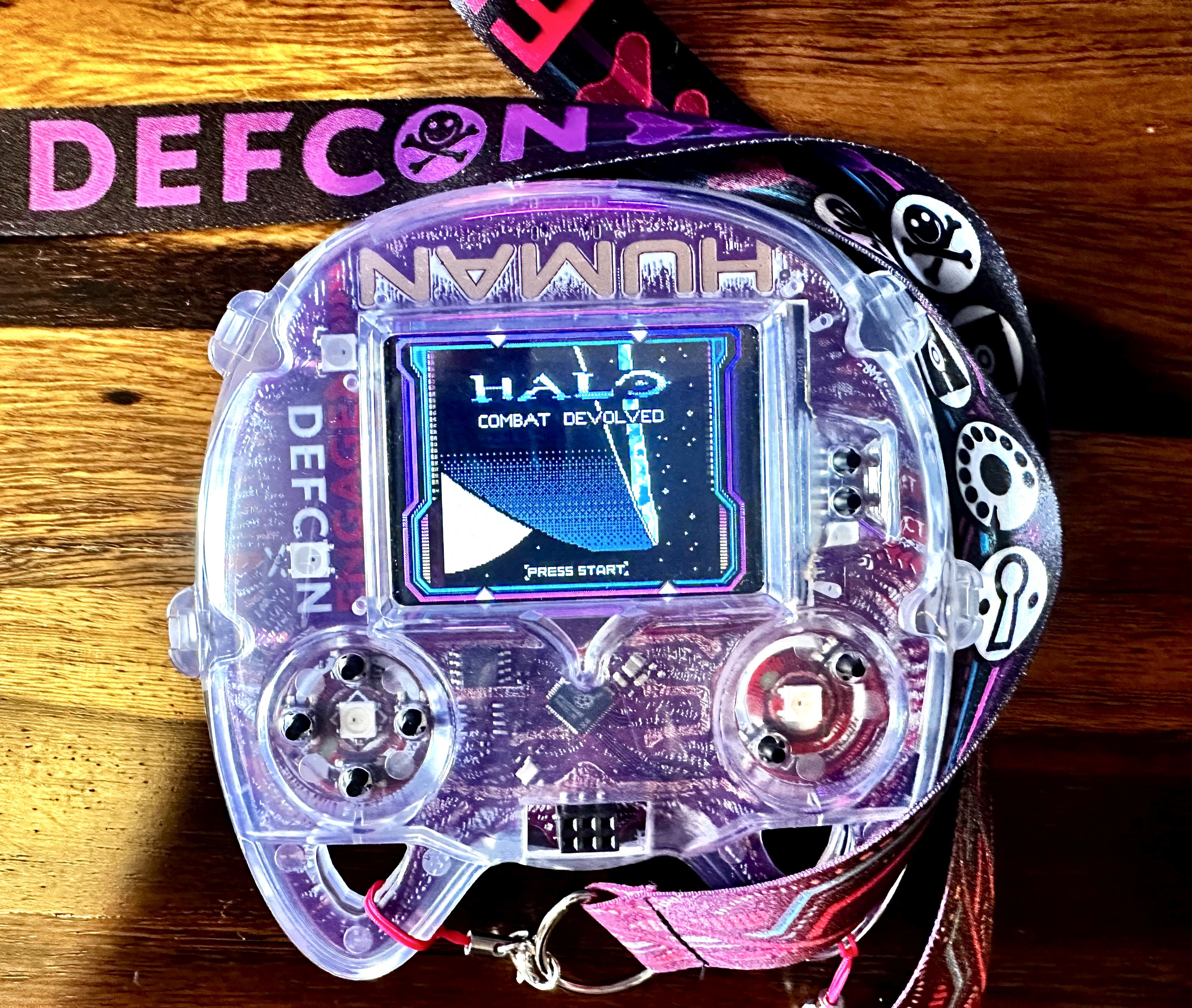
- Honorable mention: Halo: Combat Devolved, which is a fan-made Gameboy Halo creation. Not so much for the gameplay, just that it’s really impressive work and neat.