





The people who use our boards.
424 interviews since 2018


Maxime
Scali
AI Freelancer
Who are you, and what do you do? What do you like to do outside of work?
My name is Max. I’m 24, I recently graduated in Mathematics and worked as a quant at a bank. These days I’m freelancing—exploring startup ideas around AI and designing LLM-powered trading bots.
I grew up in Paris and spent the last six years across Switzerland, Sweden, and the UK for studies and work. I’m now back in Paris, which has the unexpected perk of letting me help my little brother with his high school maths.
Outside of work, I climb and powerlift regularly, and I’ve been teaching myself Japanese daily. On a completely different note, I’m converting a 19-tonne truck into a second home—the truck lives out in the countryside, so I get to switch between city life and a slower rural rhythm, which I really enjoy.
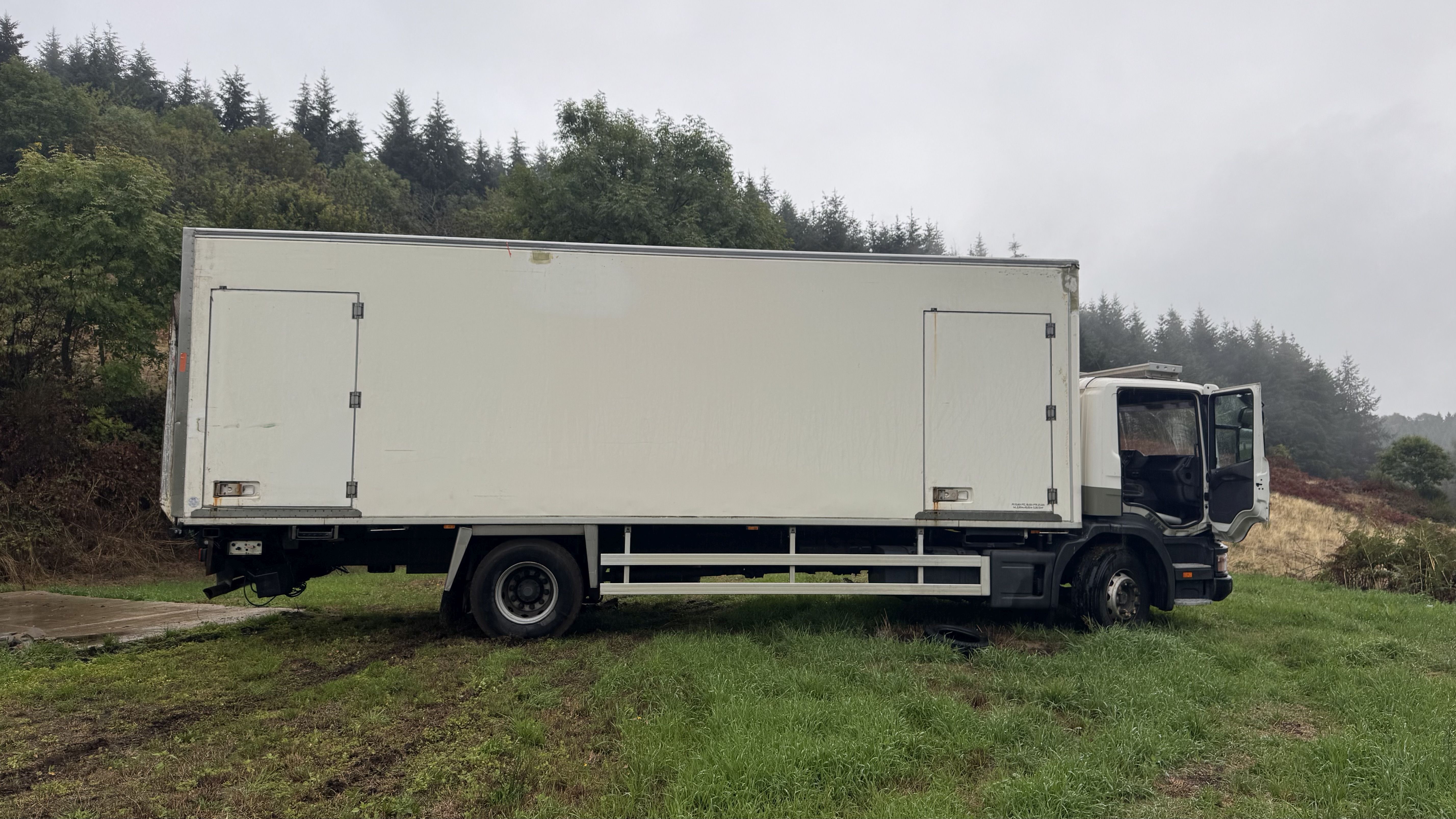
The truck is a proper 19-tonne beast—I actually got my heavy vehicle licence last year just to be able to drive it. The project is a shared one with a friend, though right after we bought it about six months ago he moved to the US, so I’ve been flying solo on it ever since.
There’s a surprising amount of space inside. The plan is to fit two 120cm-wide beds, a shower, a toilet, a kitchen, and a living area with a table and a sofa. The roof will be covered in solar panels feeding a battery system, so we stay fully off-grid.
Structurally, most of the heavy work is done—the floor, bed frames, shower, and so on—except for the window cutouts. What’s left are the smaller but arguably most important details: storage, the electrical wiring, and the water system. The finish line is in sight, but the final stretch is all in the details.
The vision is a mobile second home. It’s obviously great for travelling, and as someone who values freedom deeply, that kind of travel fits me perfectly. But it can also work as a place to live for short periods—the one piece that would make it fully self-sufficient is a Starlink antenna on the roof, and then I can genuinely work from anywhere.
On climbing: I’m currently in Paris, and before that I was in London, so I’ve mostly been climbing indoors at gyms. But my real passion is tree climbing. I’m less interested in technical rock routes and finger strength, and more drawn to reading my body, finding balance, and that specific feeling of freedom you get once you’re up in the canopy. My most memorable moments have been climbing in Zhangjiajie National Park in China and up in the Swiss Alps—hard to top either of those.

Music is also a constant in my life. I tend to oscillate between two very different worlds: hardstyle and hardcore to power through work and training sessions, and classical or original soundtracks when I want to disappear into an imaginary world.
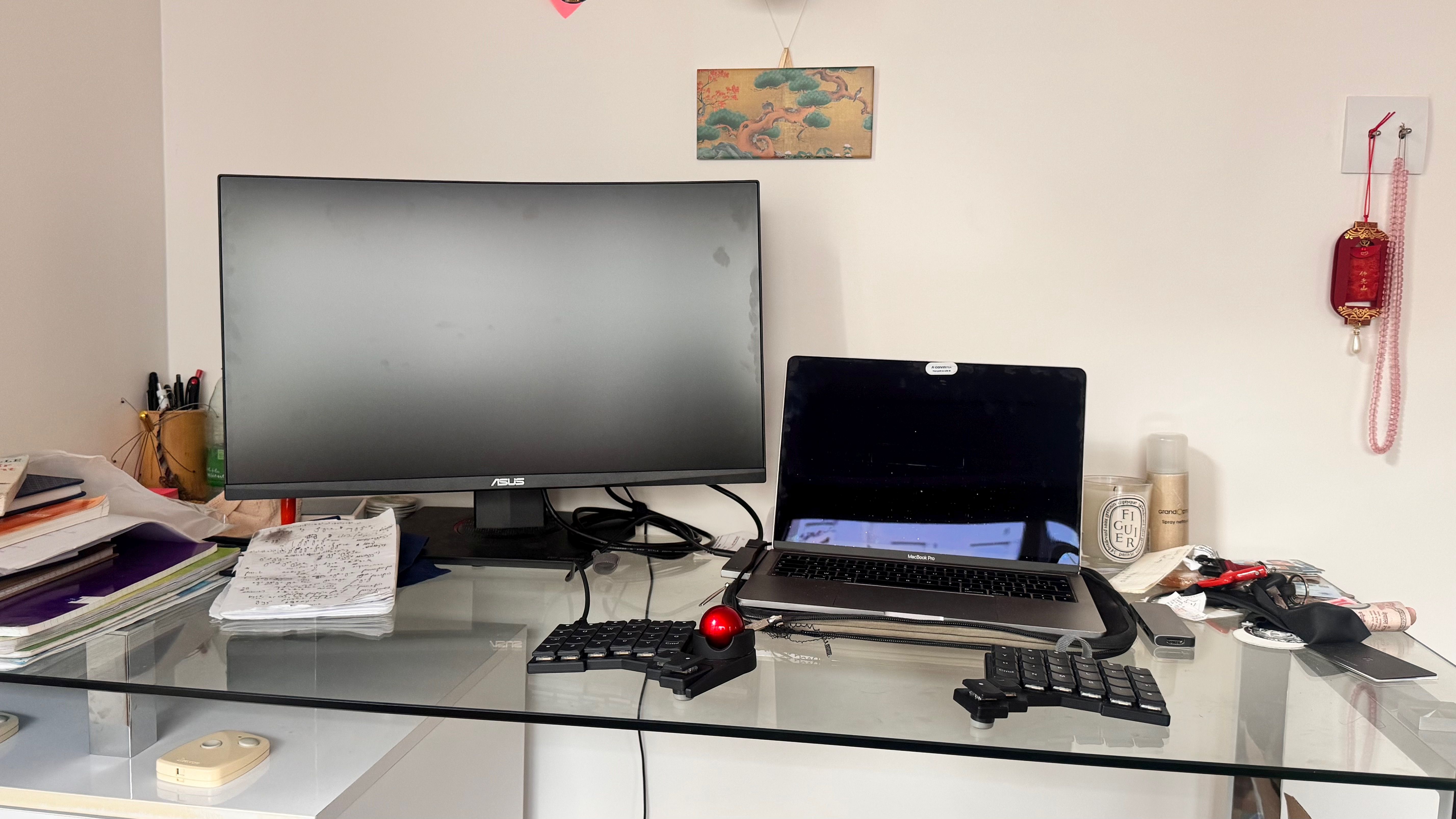
What hardware do you use?
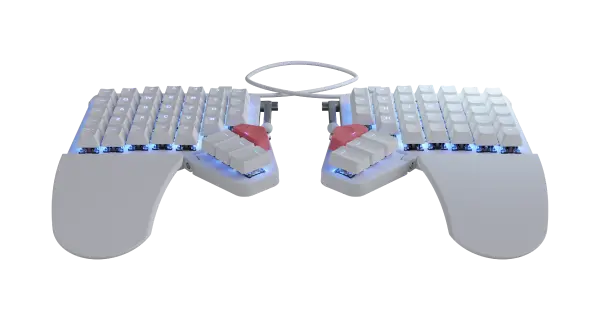
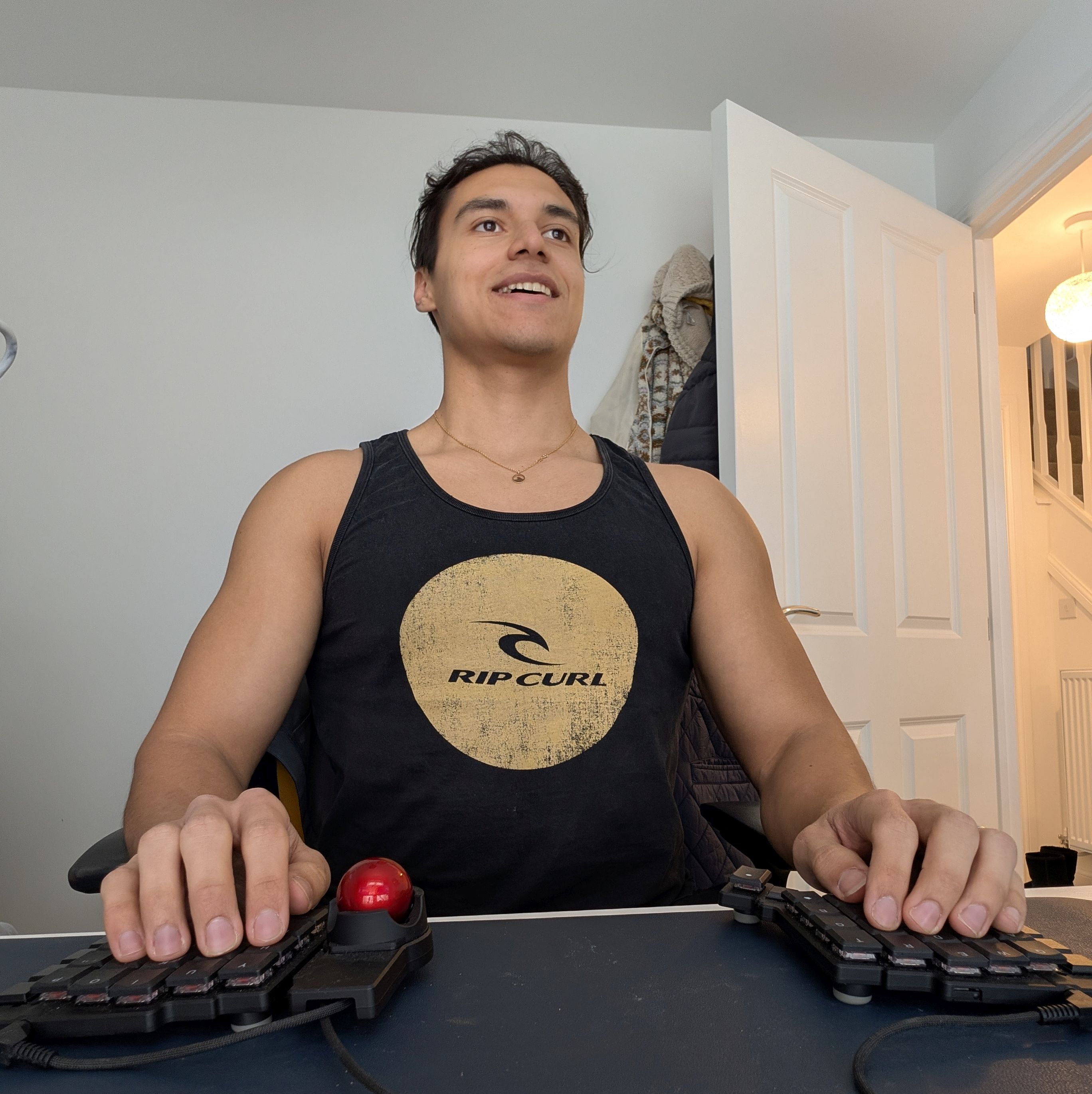
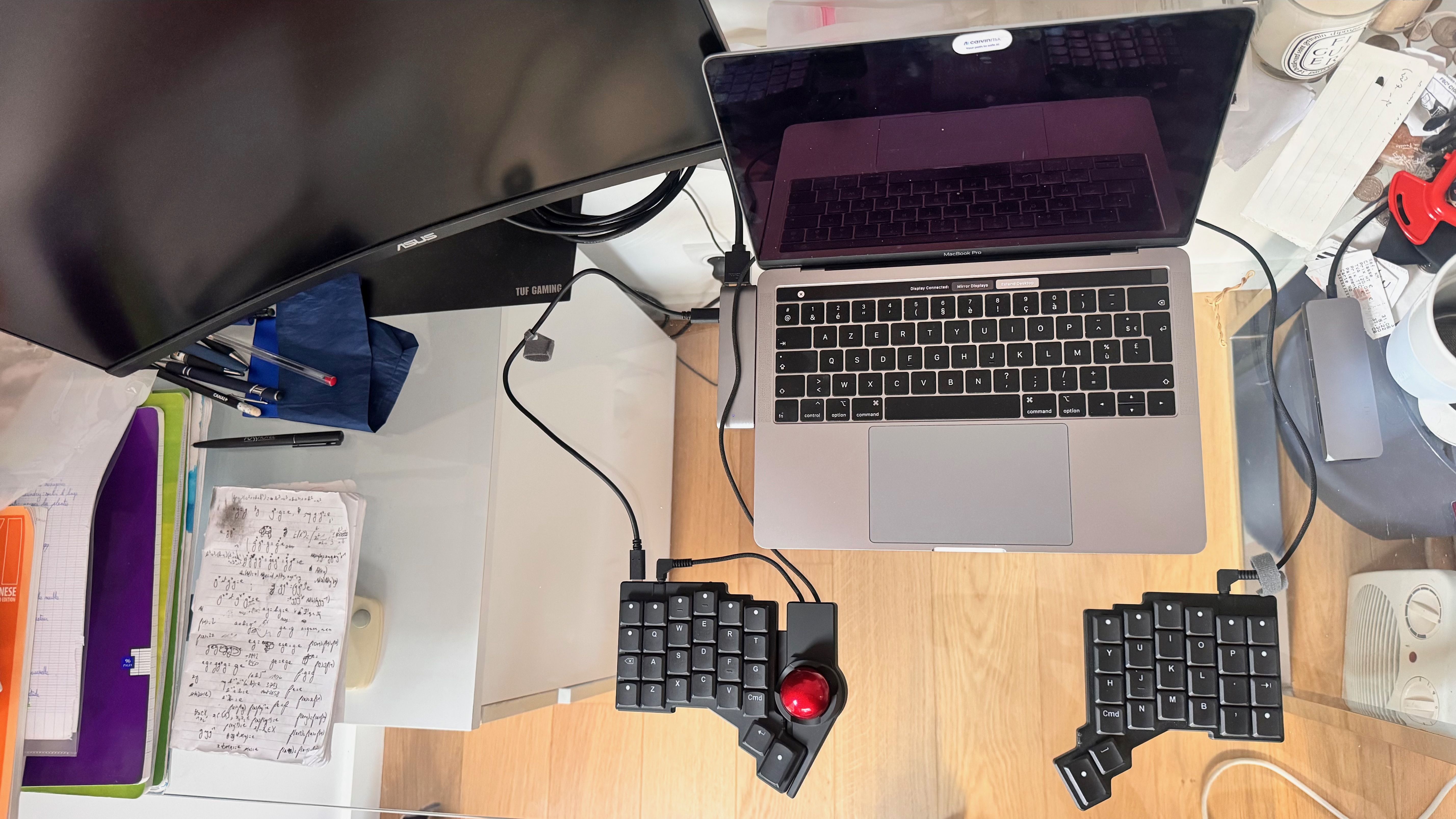
My machine is a 13-inch MacBook Pro (Intel Core i5) that travels everywhere with me. At home, I plug it into an Asus TUF Gaming VG24VQR—a monitor I inherited from my grandfather, since he no longer needed it. Whenever I have access to a proper desk, I also pair it with my ZSA Voyager topped with the ZSA trackball.
The keyboard was the first thing I chose to invest in, and deliberately so—it felt like the most direct bottleneck between my thoughts and what actually makes it onto the screen. A new computer is next on the list; 8GB of RAM is increasingly becoming a problem.
And what software?
I spend most of my time in Cursor, which I find the best IDE for AI-assisted coding—though I haven’t tried the latest versions of Codex or Claude Code yet, so that opinion might evolve. For notes, brainstorming, and to-do lists, I live in Notion. I use Chrome and Comet for browsing, though I have a chronic tab-hoarding problem—I can never bring myself to close anything “just in case.” A good chunk of my time also goes to email, and I use Claude Desktop for pretty much any question that crosses my mind.
What’s your keyboard setup like? Do you use a custom layout or custom keycaps?
I started mastering the Voyager with a standard QWERTY layout, and built custom layers on top of it for digits and symbols, shortcuts and macros, and trackball controls. After around 30 revisions I feel quite comfortable with it, but I am still not satisfied with my speed.
What drew me to a split keyboard in the first place was how bad I was on a regular one—my hands were never in a consistent home position, so I was constantly looking at the keys. It used to frustrate me that I typed faster on my phone than on an actual keyboard. Now it’s genuinely satisfying to type without looking, to the point where glancing at the keys actually throws me off.
My original goal when buying the Voyager was to eventually switch to an ergonomic layout too. I had settled on Dvorak—I love the idea of having all the vowels on one side of the home row and the most common consonants on the other. I just haven’t made the leap yet. Maybe writing this is the nudge I needed to finally start!
What would be your dream setup?
A stack of two ultrawide monitors (35 inches or more, low latency) one on top of the other, with a couple of smaller vertical screens on the sides. On the machine side, I’d want at least 32GB of RAM and a few H200 GPUs to run neural networks locally. If I had to dream even bigger, I’d add a Neuralink chip in my brain that would allow me to transfer data to my computer at the speed of thought.